The kind of stock you choose will be informed by the nature of the job you’re doing. If you were working commercially, the checking paper quality – the weight and finish of the paper – is something you would do with your client, as paper choices can add both quality and cost to a design hob. The advent of high quality digital printed in almost every high street has made high finished standards much more achievable and affordable, although you might be amazed at what can be achieved with a photocopier and coloured 80gsm paper.
Knowing what papers are available and their qualities is an important part of what you might offer as a commercial book designer. One way to do this is by requesting sample books from commercial paper merchants, or talking to your local printers, who can give you a swatch of the papers they recommend for you to share with your client and keep for future reference.
Brief: Look at as many different kinds of books as you can and critically start to gauge the weight, grain and finish of the papers. Do all books keep the same paper choices throughout? What’s the relationship between the covers and the paper inside? Which books do you like the feel of, and why?
Annalise the binding style of the books you’ve collected. How does the book block adhere to the cover? How does it adhere to the spine? Is it stitched or glued? You’ll notice that in case-bound or hardback books, the sections, or signatures, are sewn together and glued to the spine. Paperback books, on the other hand, are more likely to be ‘perfect-bound’, where the pages are glued together and then directly onto the covering.
Below is a list of the books that I had listed in the previous exercise and looked closer at the binding style and pages used within the book.
Book 1 – The Very Hungry Caterpillar by Eric Carle
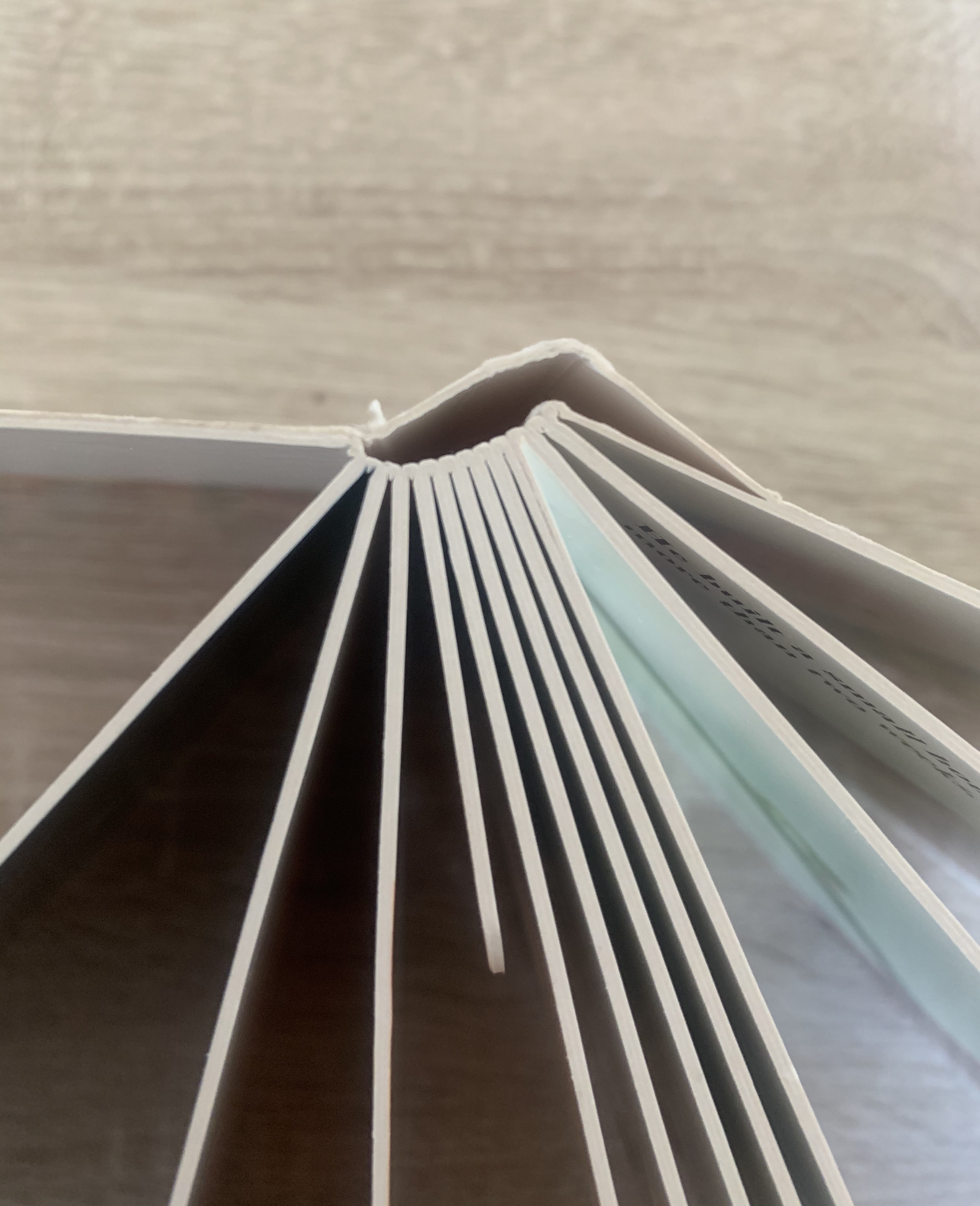
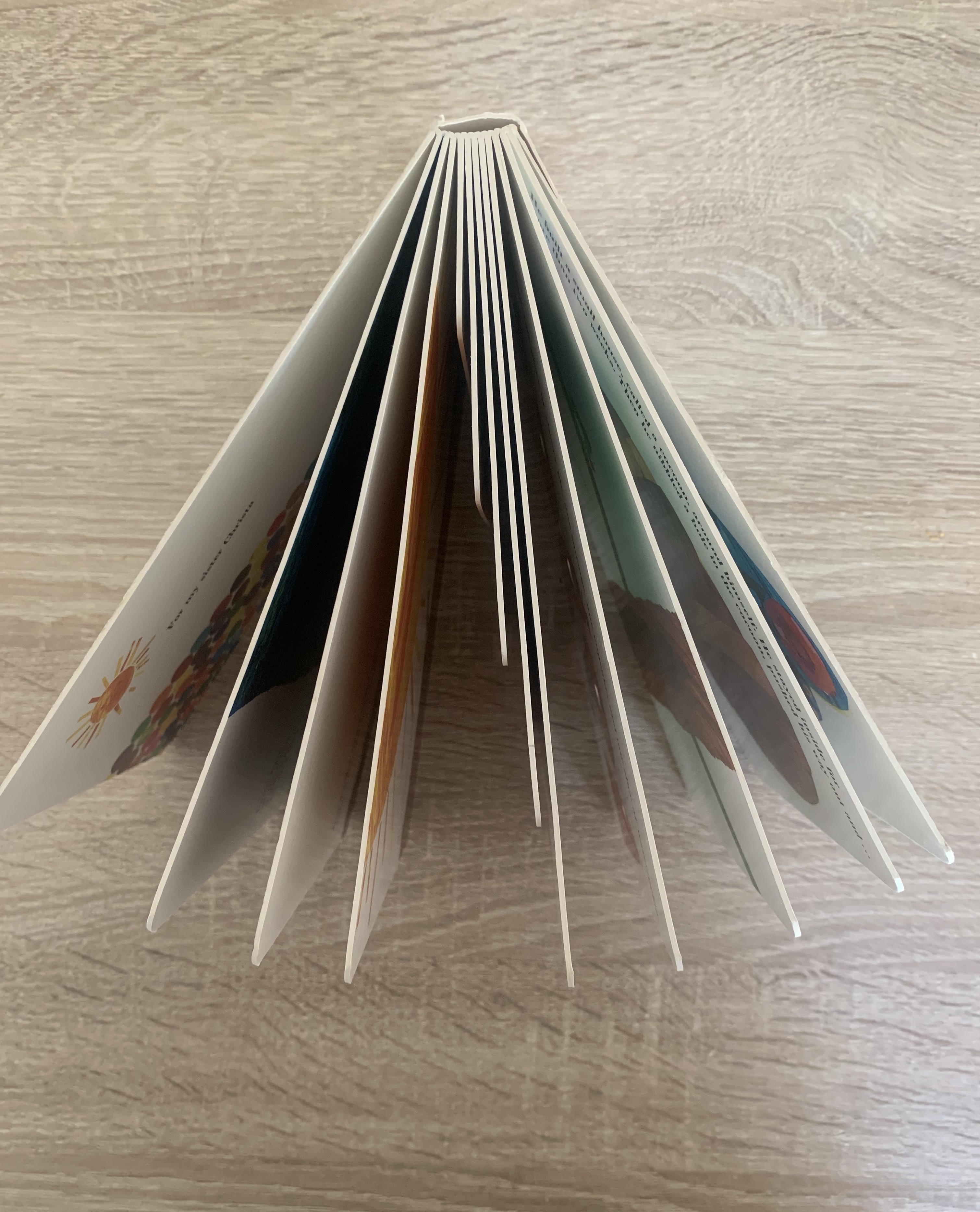
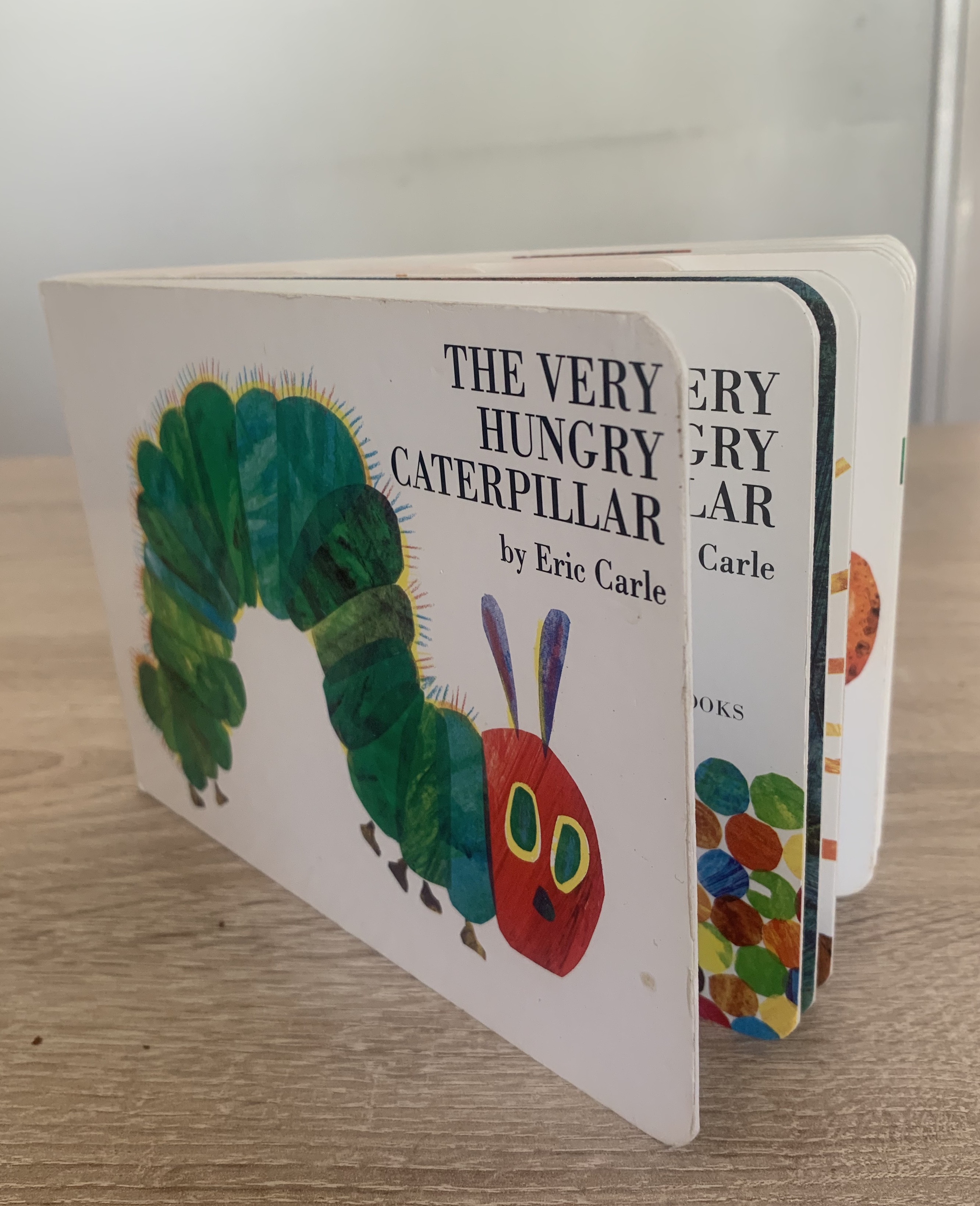
Binding
- Glued
- No end paper
- Clear signatures
Paper
- Thick card pages
- Smooth protective coating on pages
- Curved edges
Book 2 – Dear Zoo by Rod Campbell
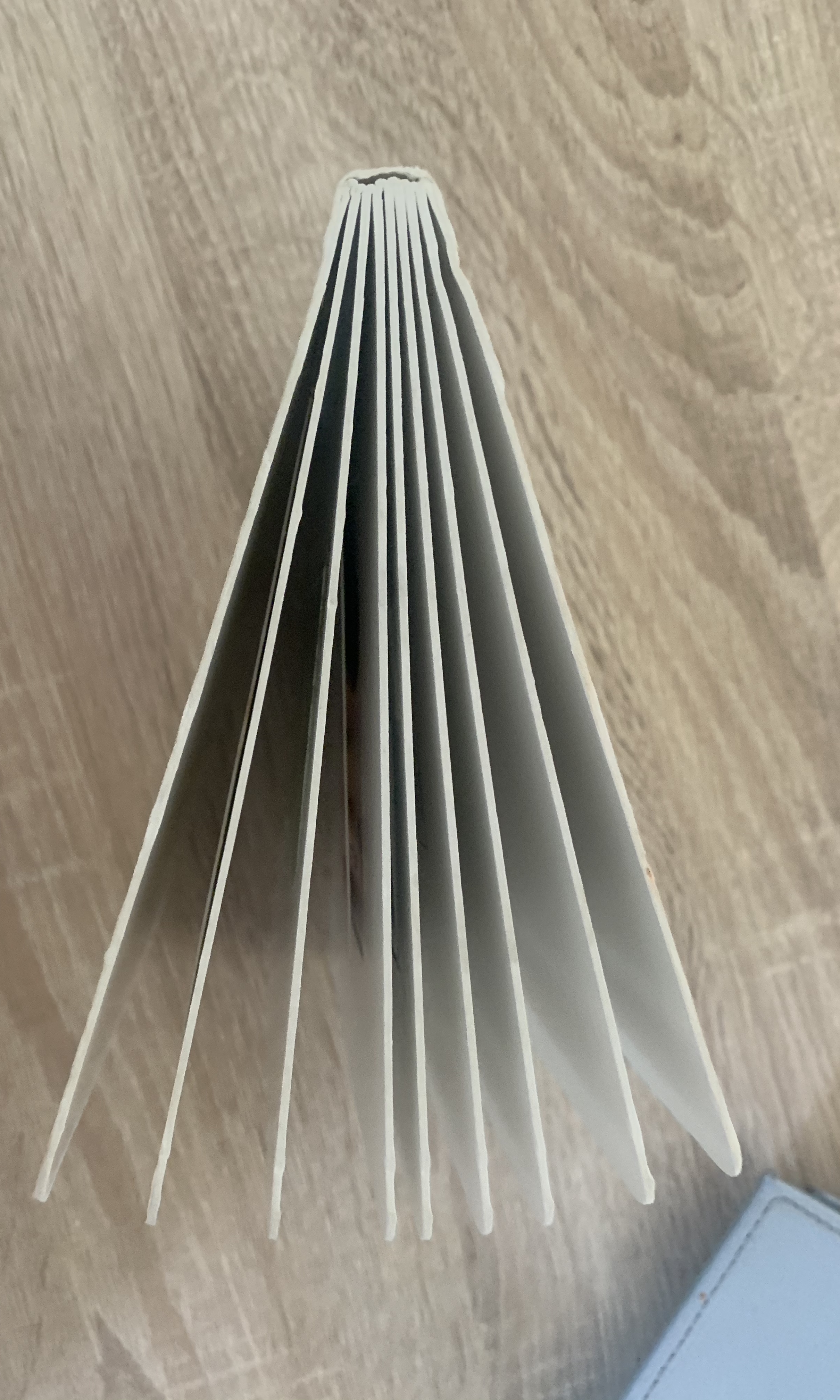
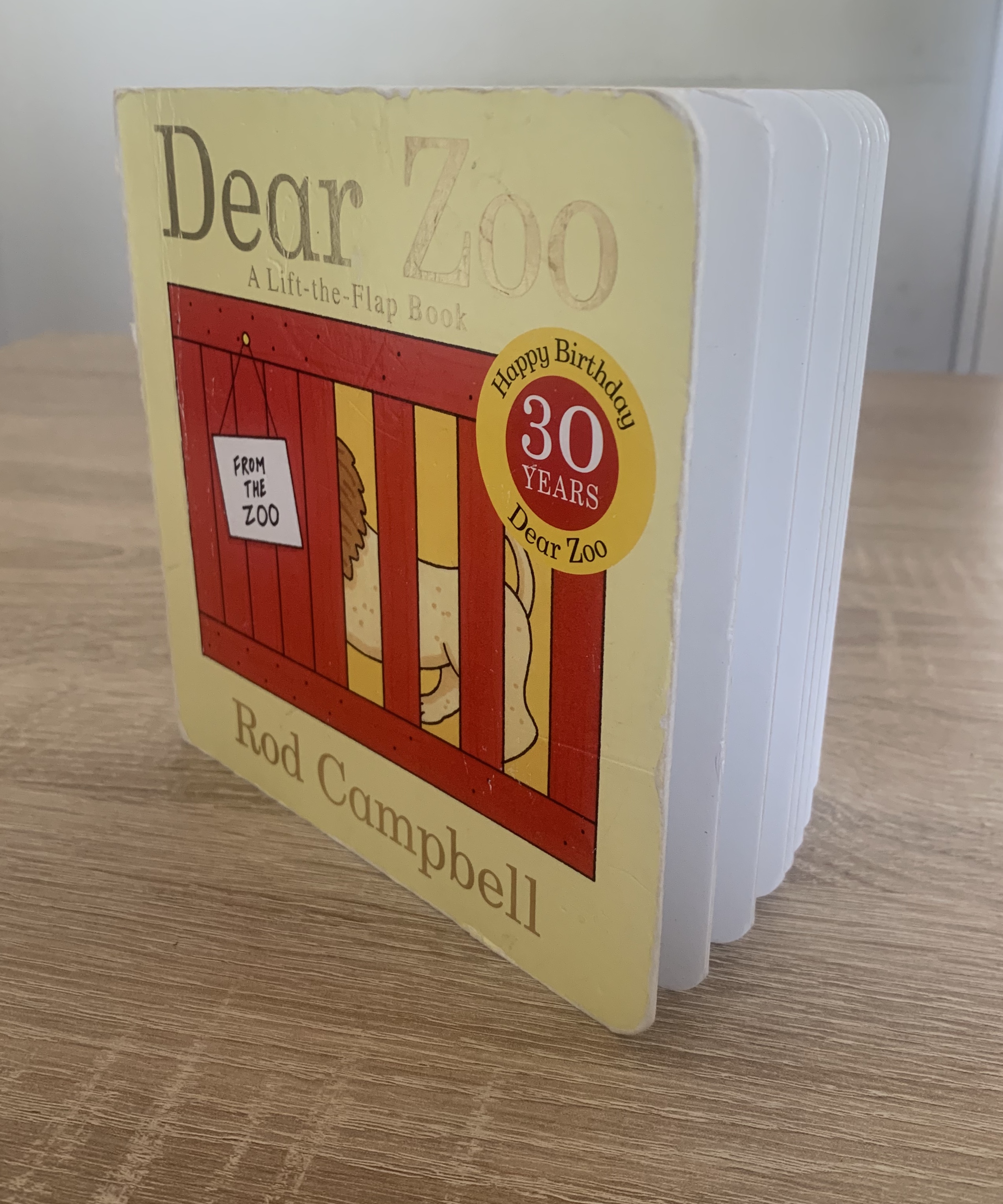
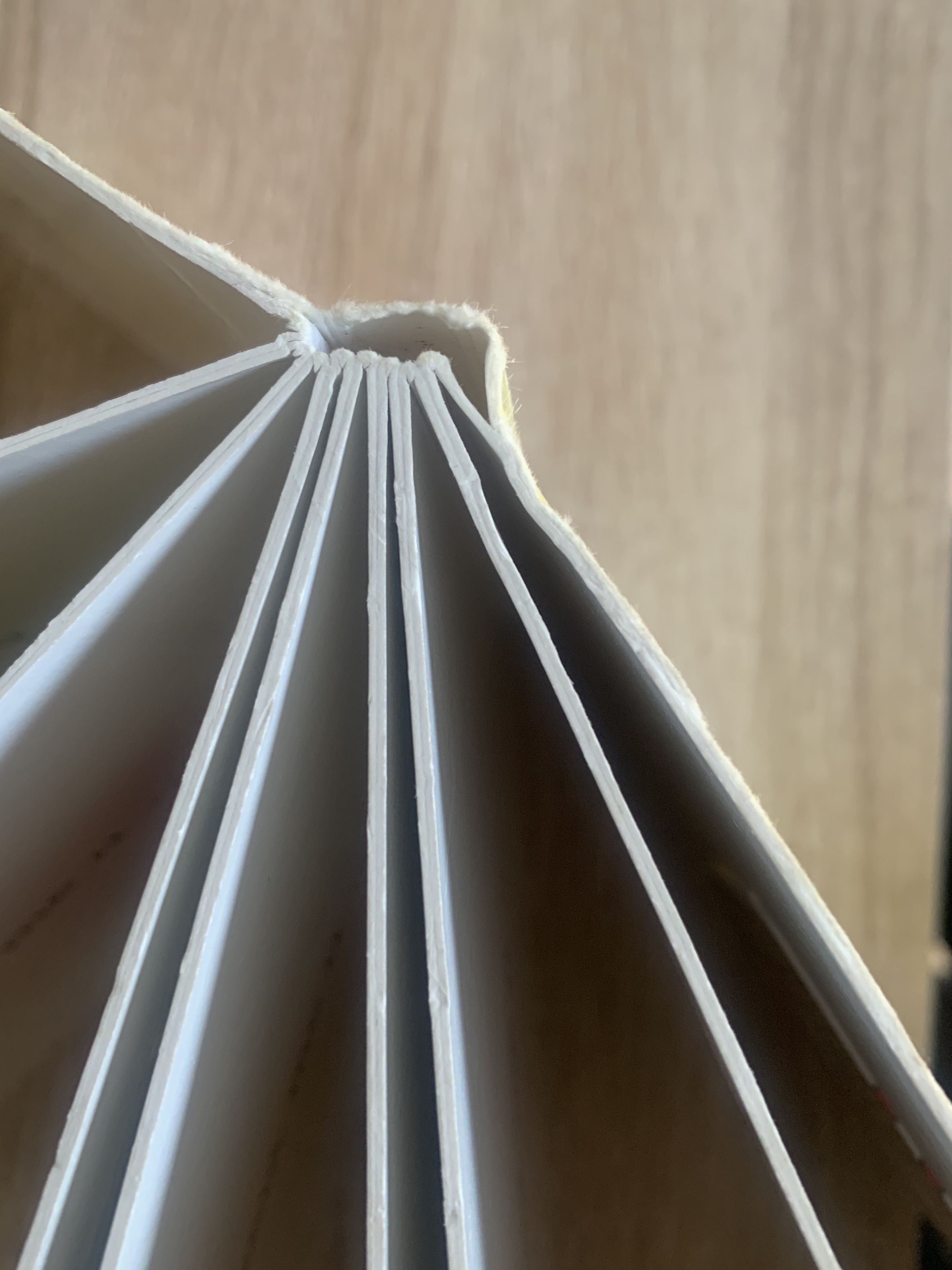
Binding
- Glued
- No end paper
- Clear signatures
Paper
- Thick card
- Curved edges
- Protective coating
Book 3 – The Queen makes a scene by Mairi Mackinnon
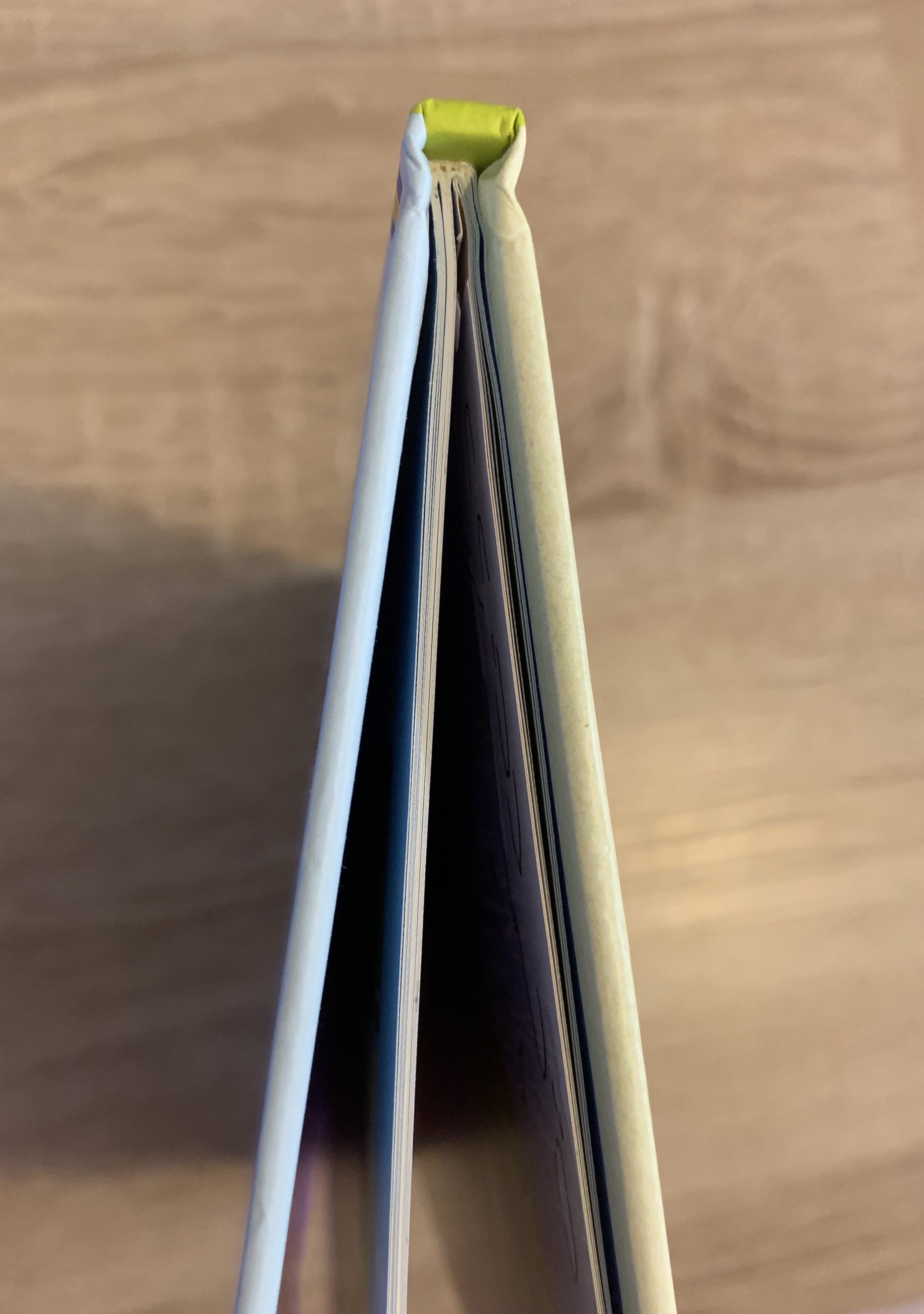
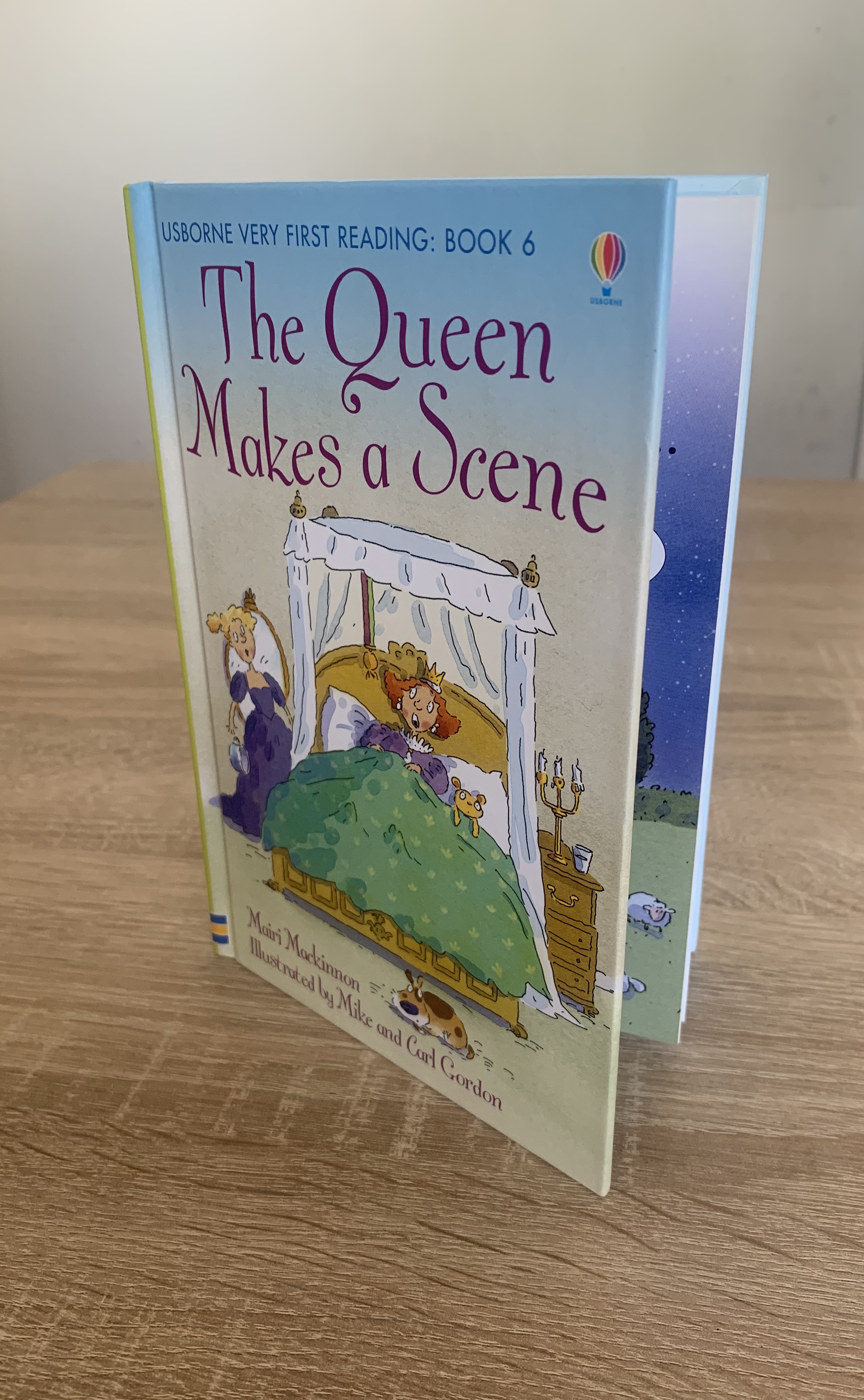
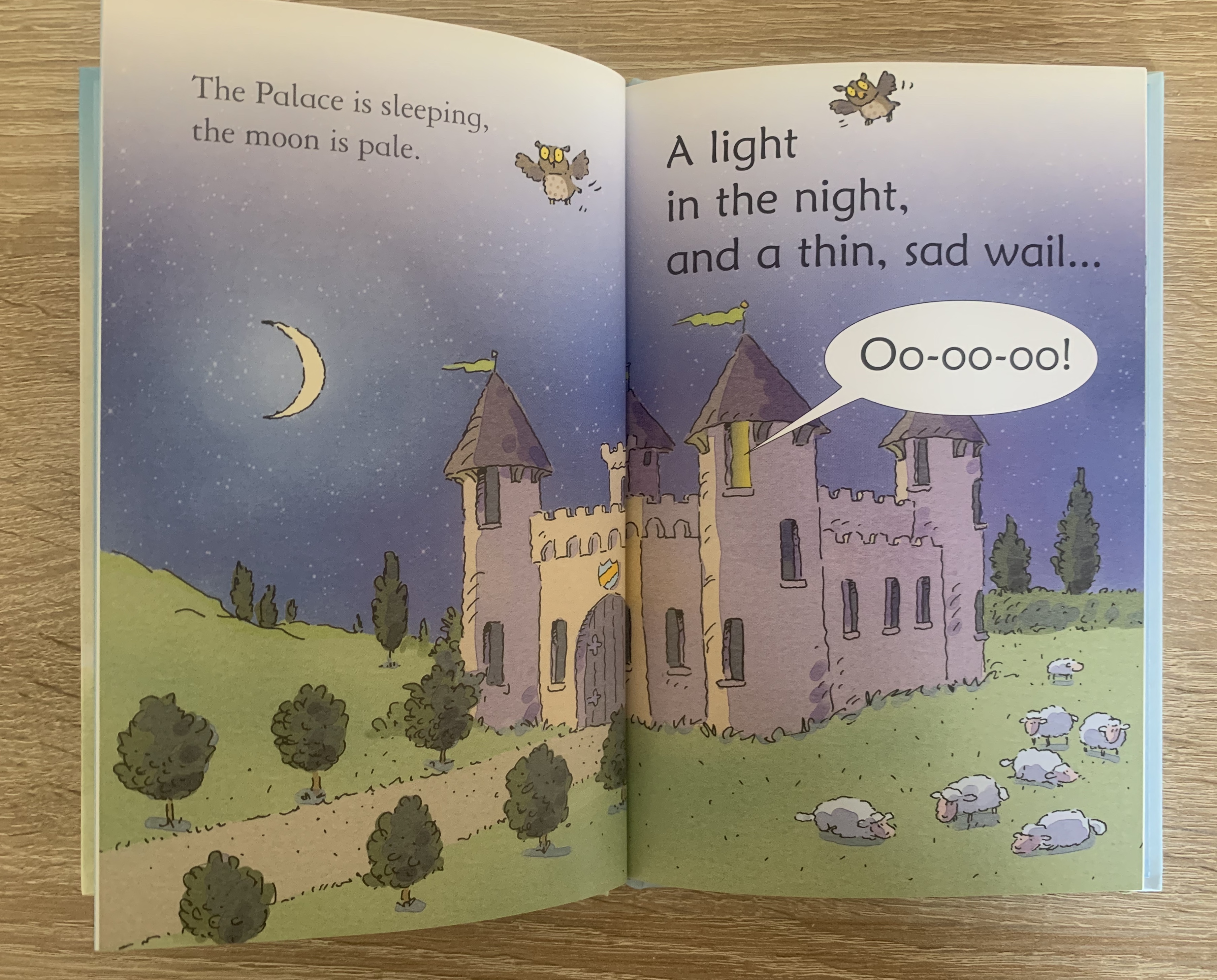
Binding
- Glued
- 2 clear signatures
- Paper covered hardback
- Coloured end papers
Paper
- Silk coated paper
- Fairly thin pages (considering its a children’s book)
Book 4 – Matilda by Roald Dahl
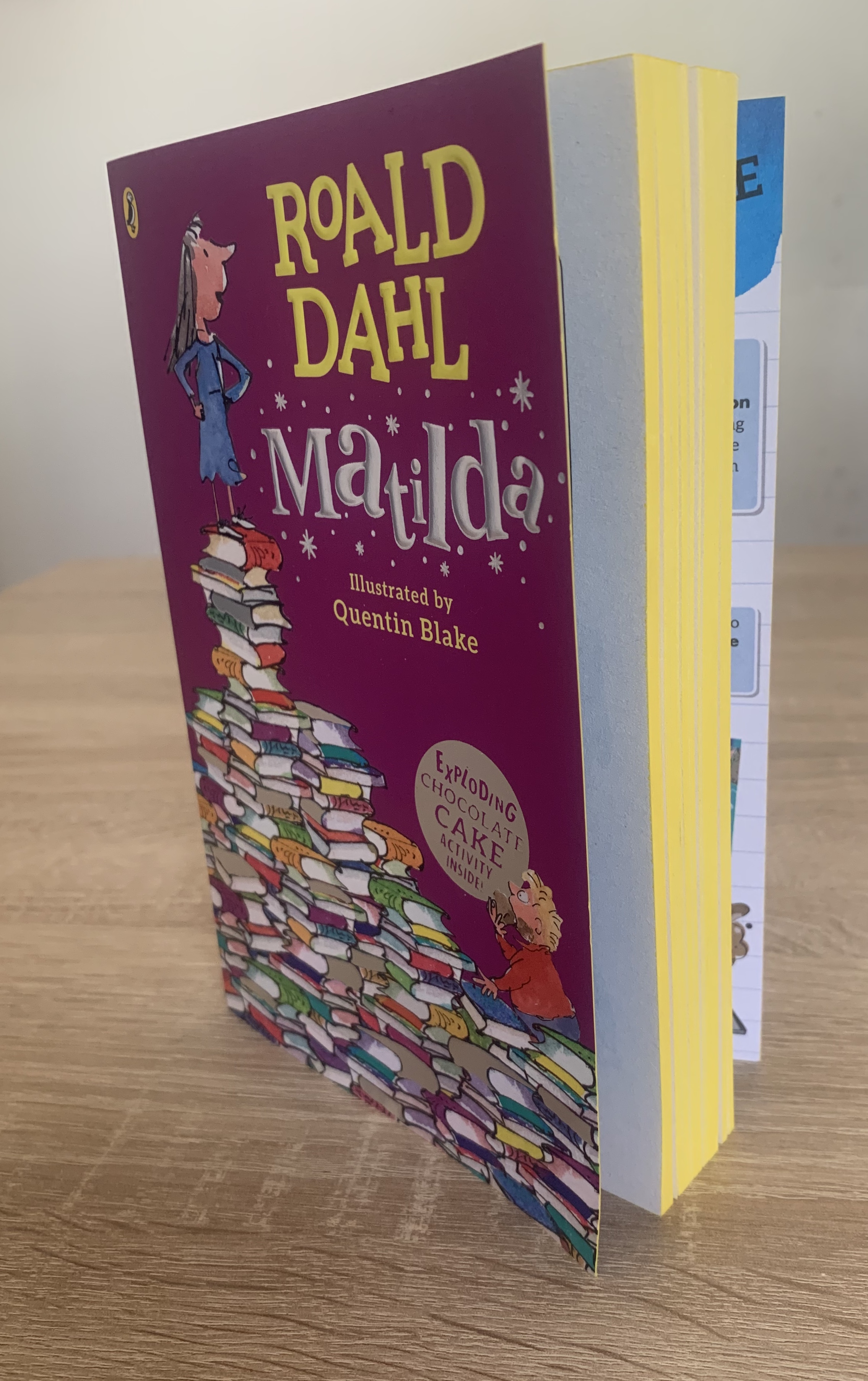
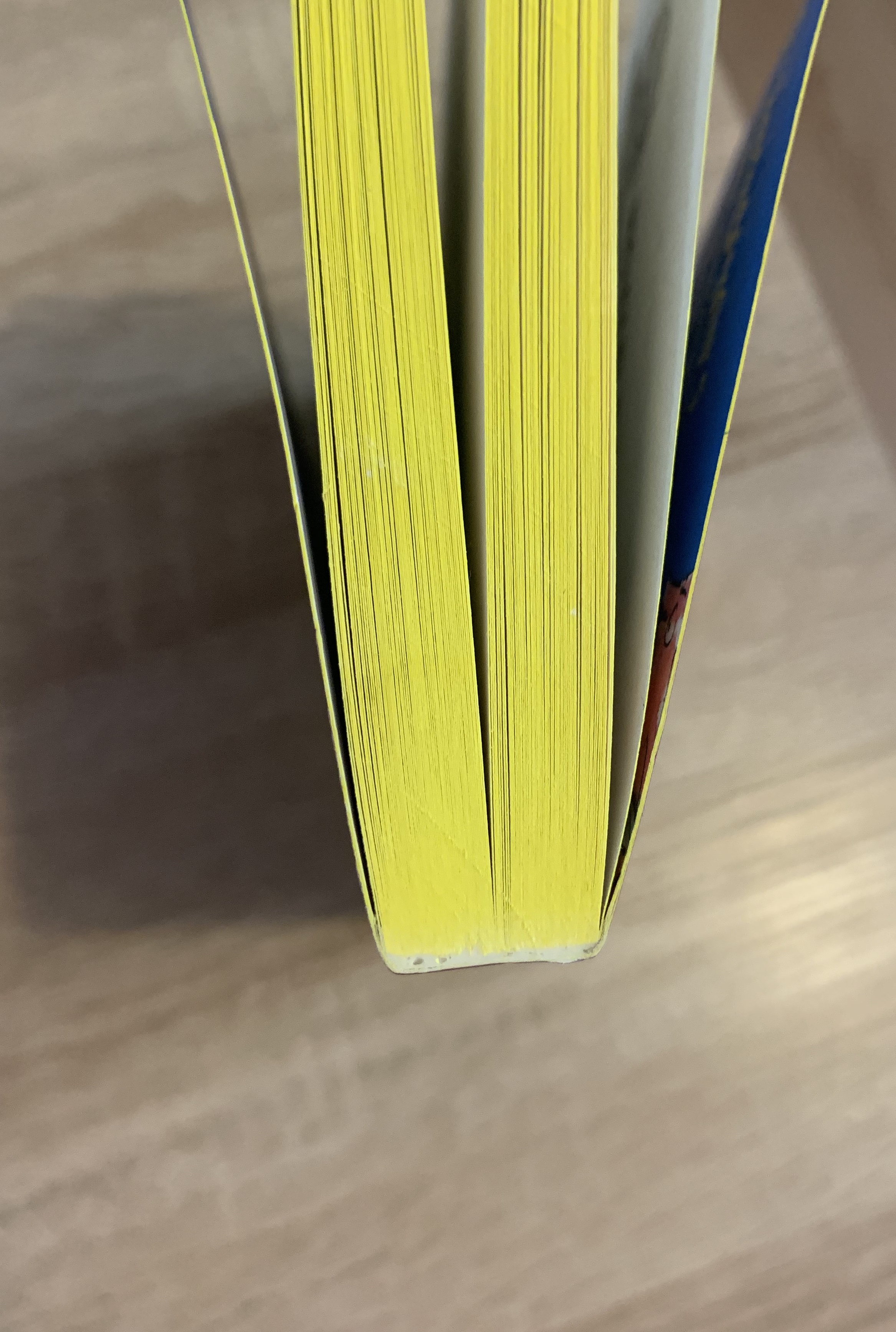
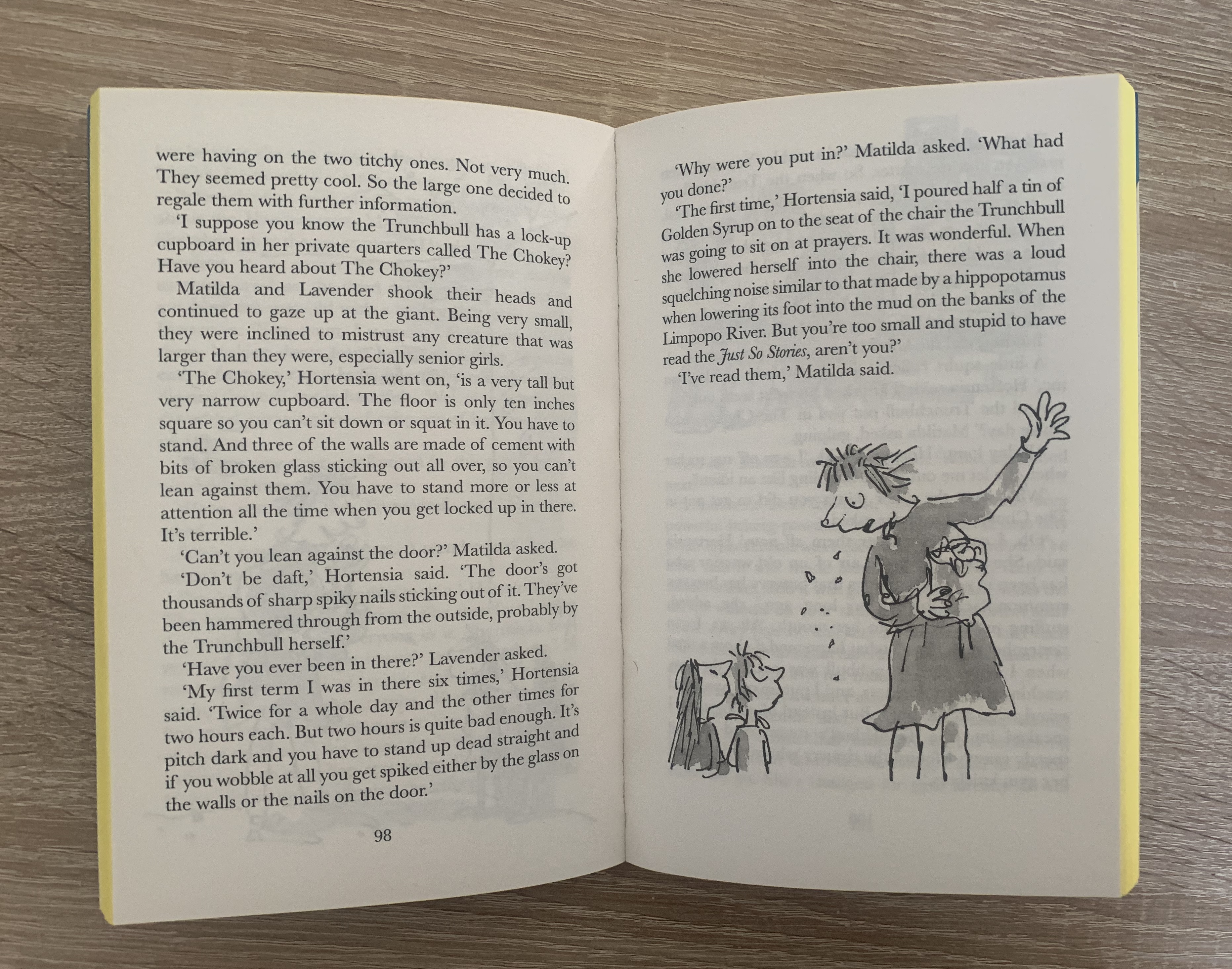
Binding
- Book block glued to spine
- Paperback
Paper
- Cover is matte with embossed title and holographic details within the illustration
- Uncoated paper
- Edge of paper dyed yellow
Book 5 – Make your own luck by Kate Moross
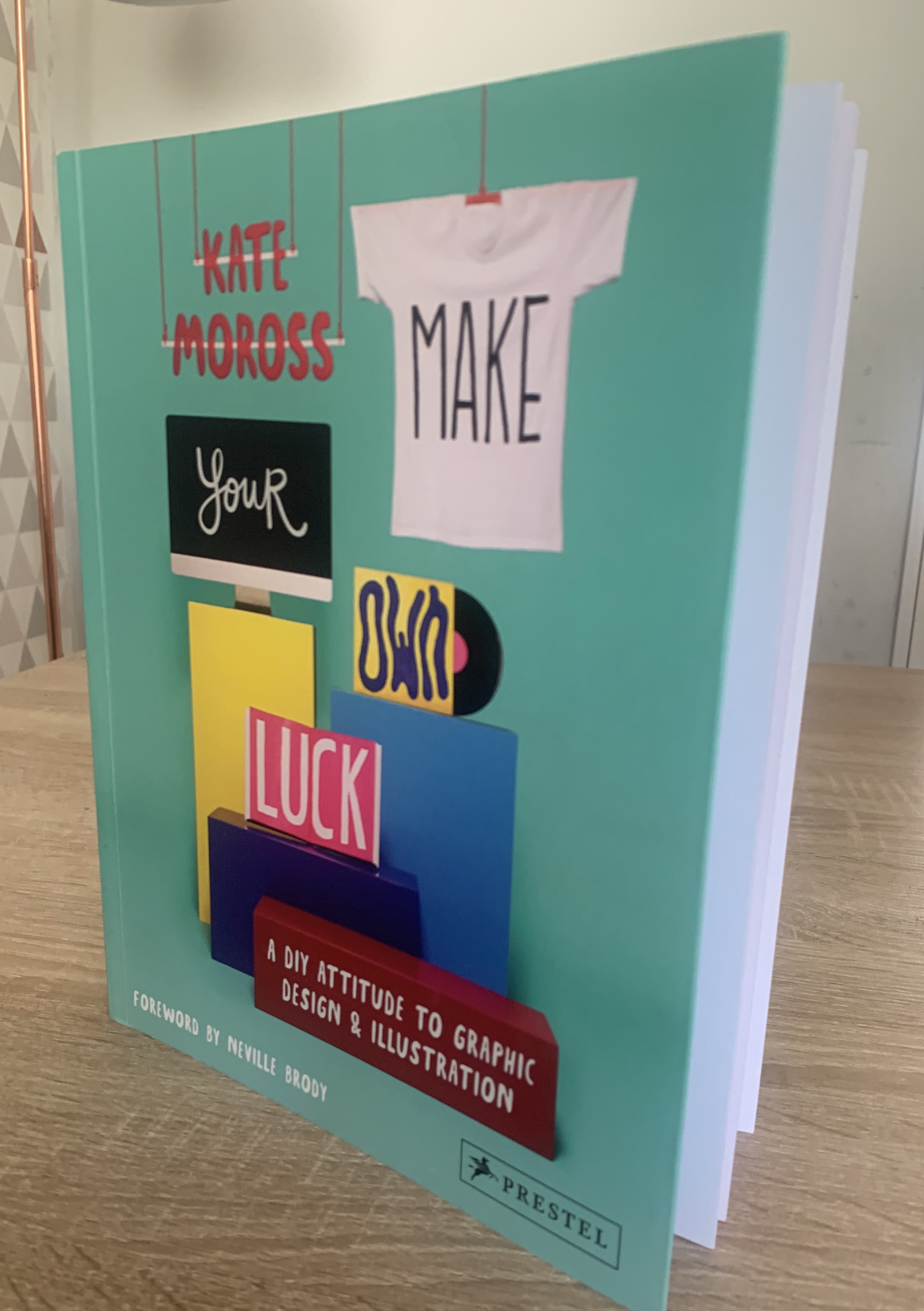
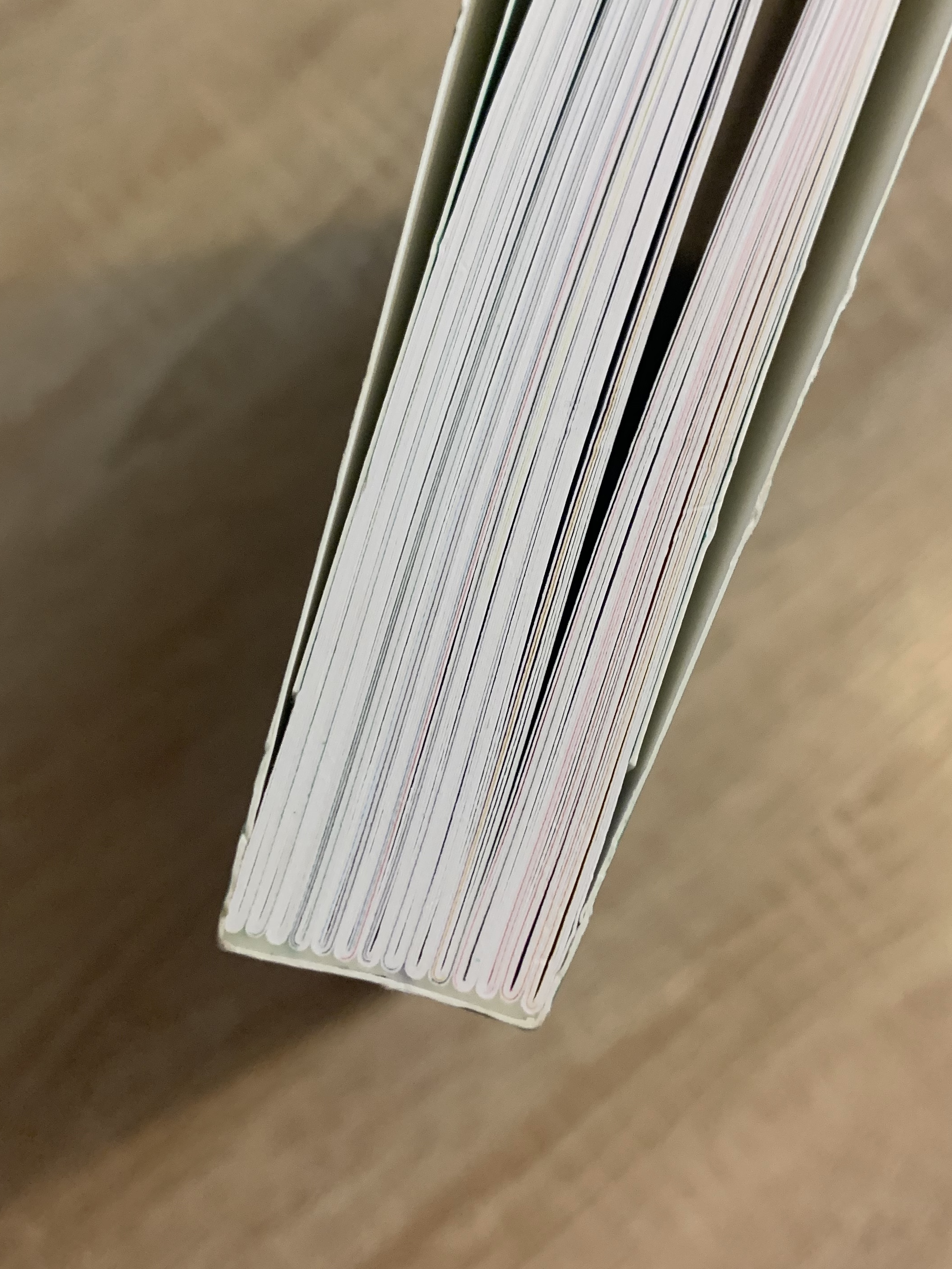
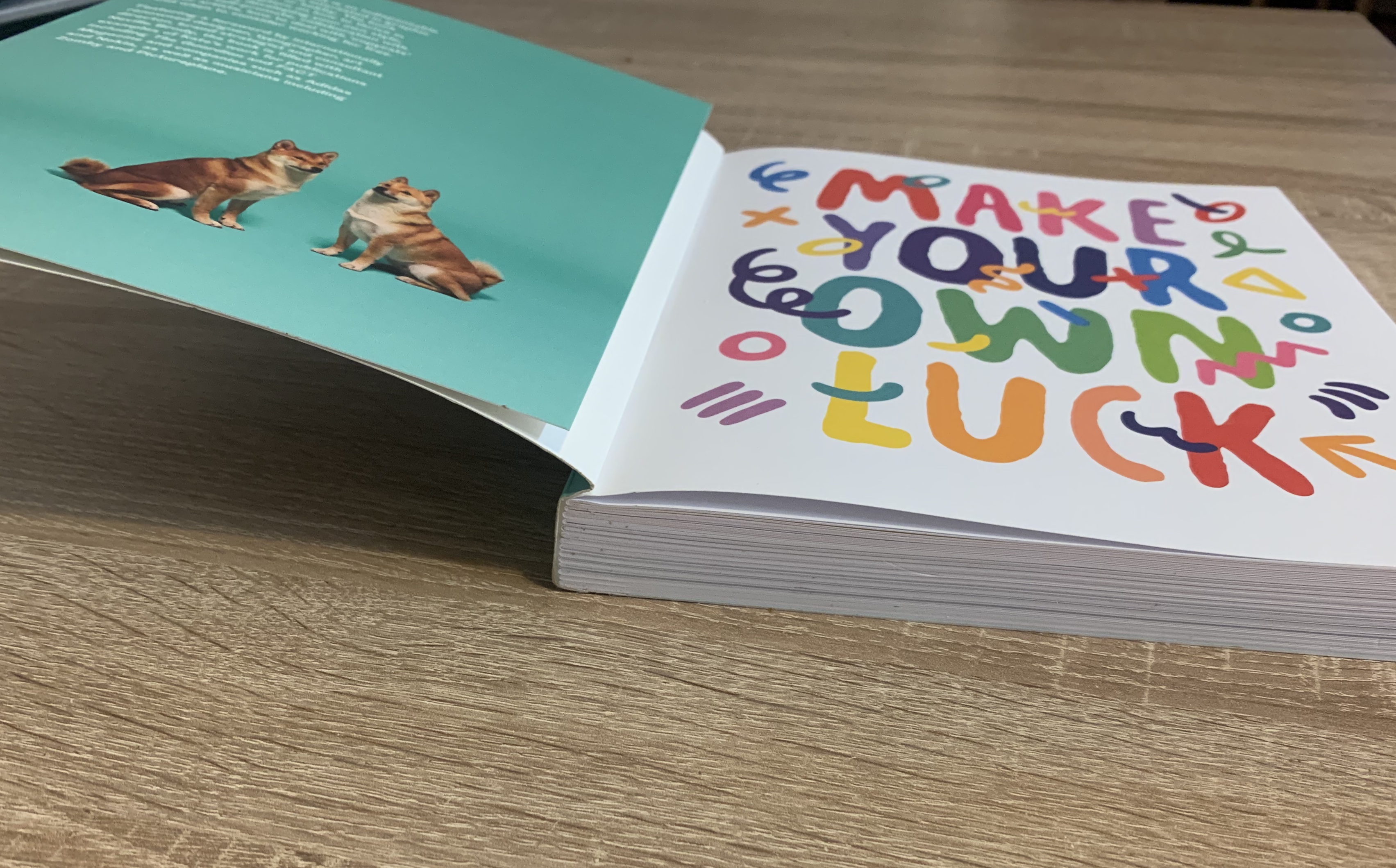
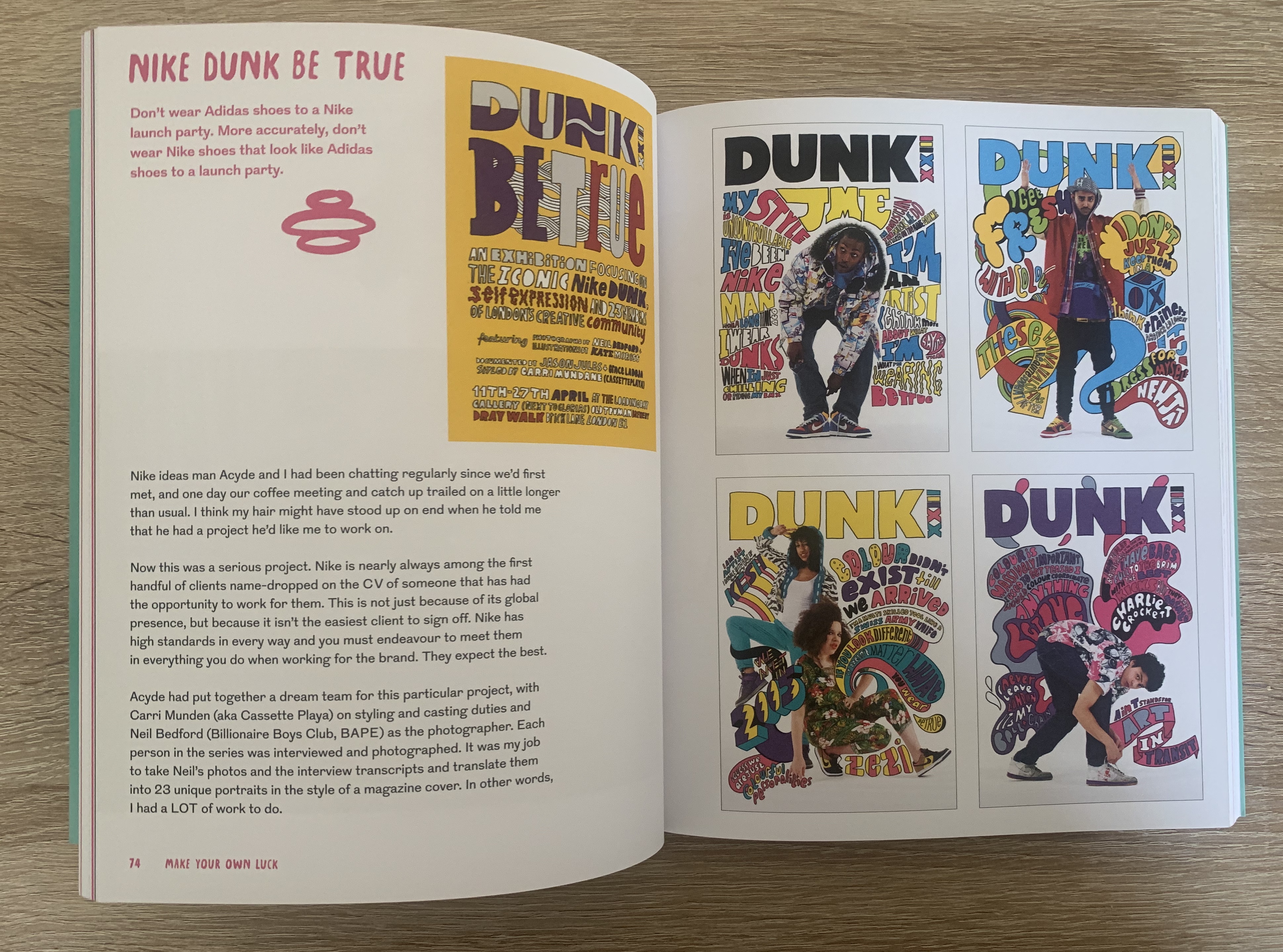
Binding
- Glued to the spine
- 14 signatures
Paper
- Cover is matte coated thin card
- Smooth premium paper inside
Book 6 – The Bazaar of bad dreams by Stephen King
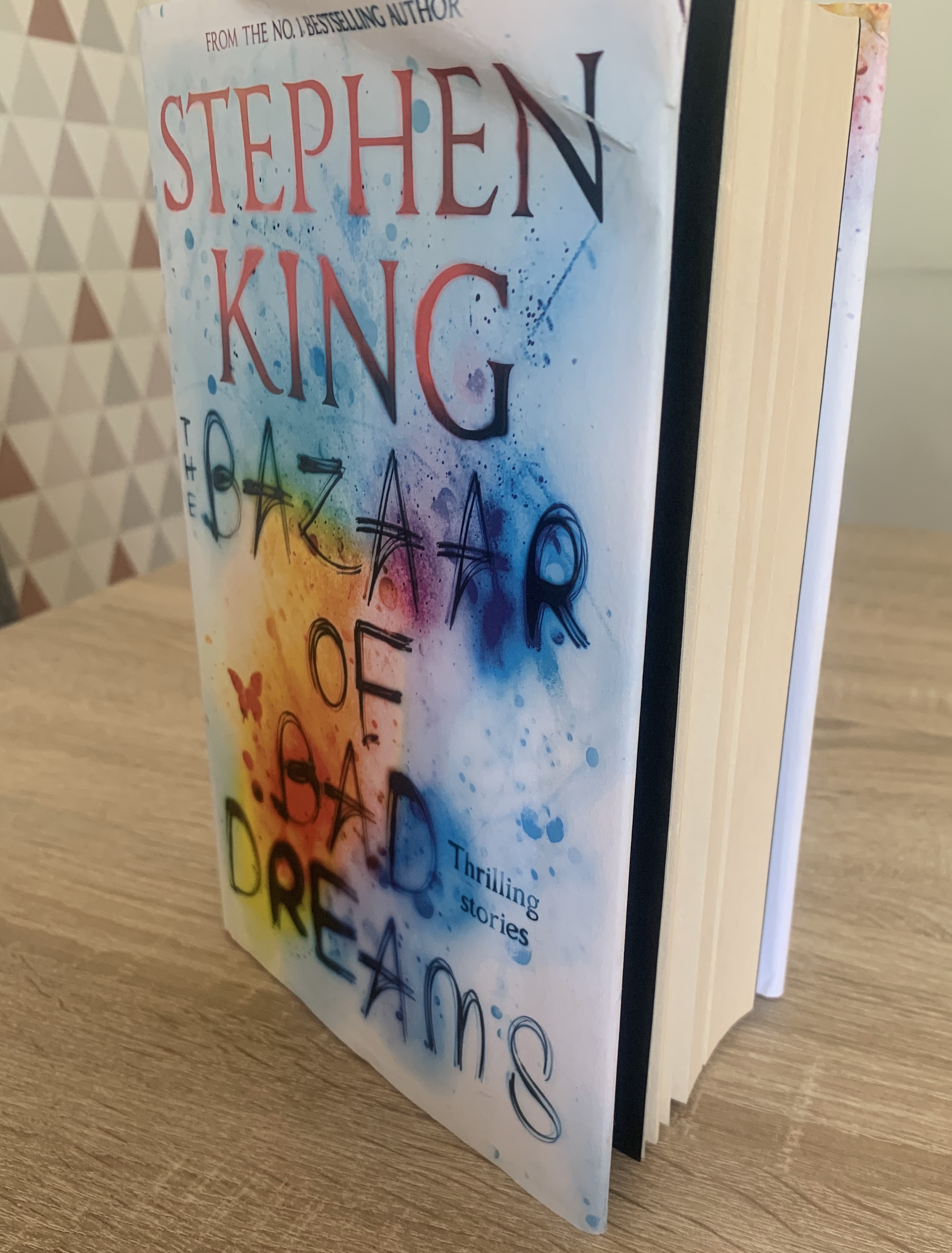
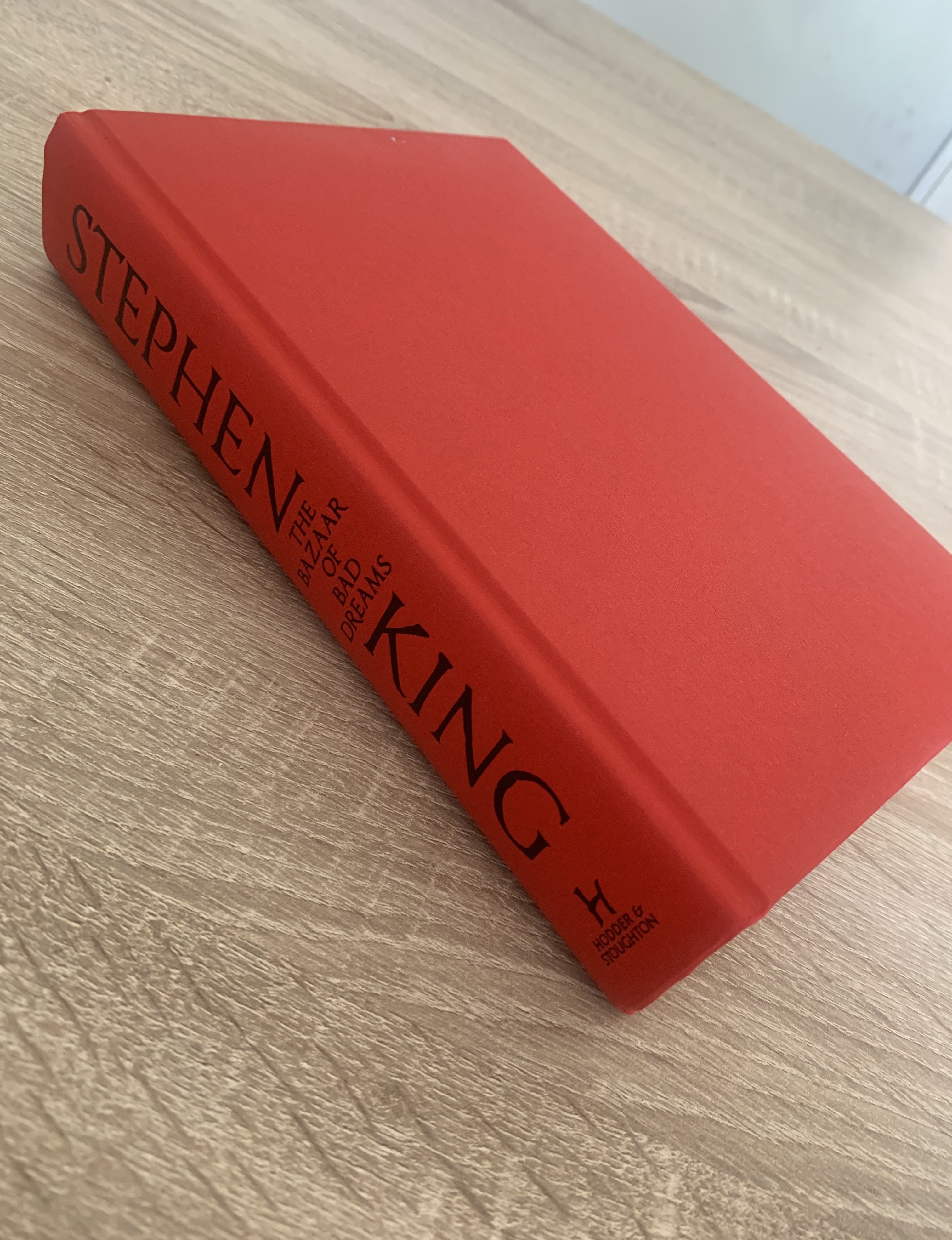
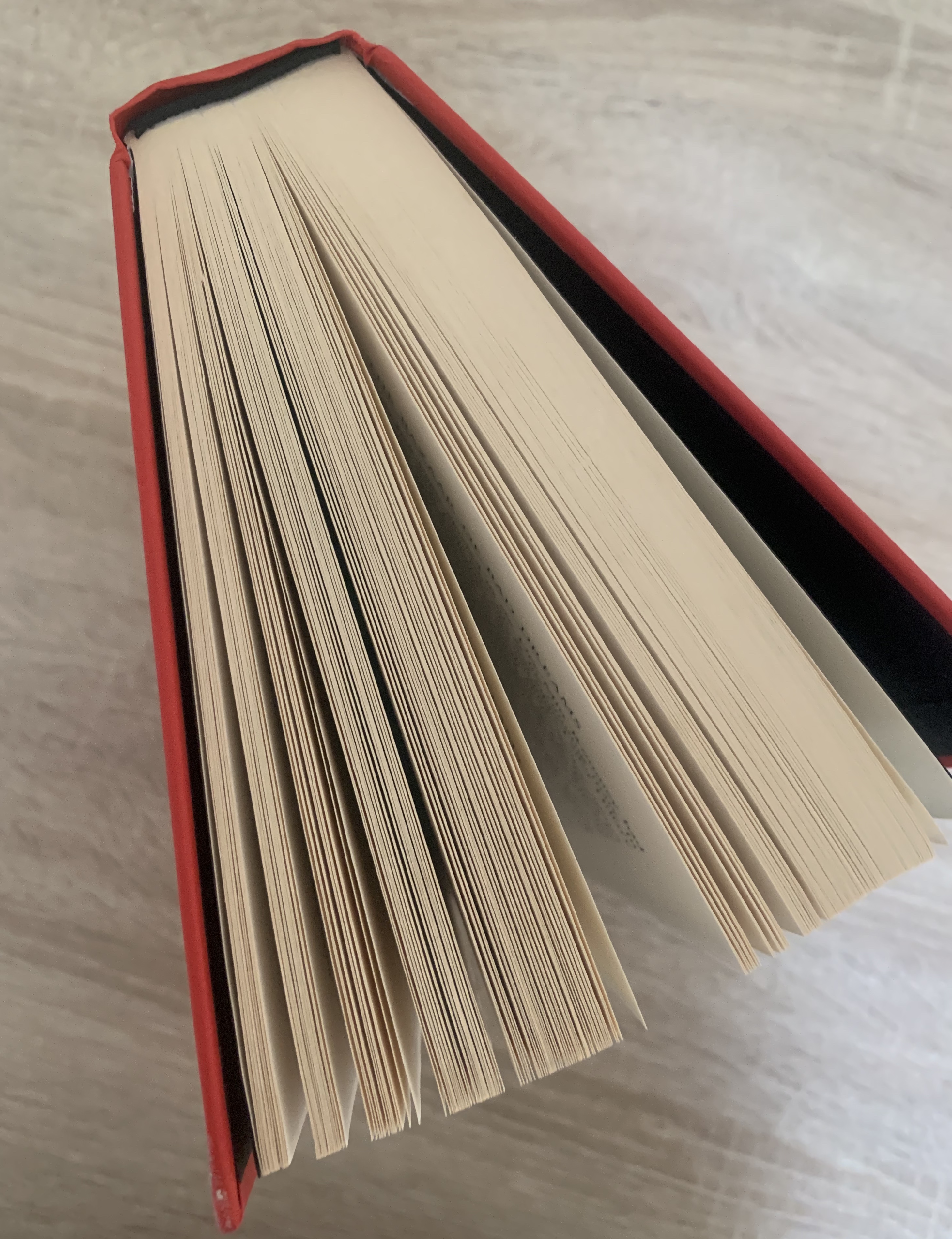
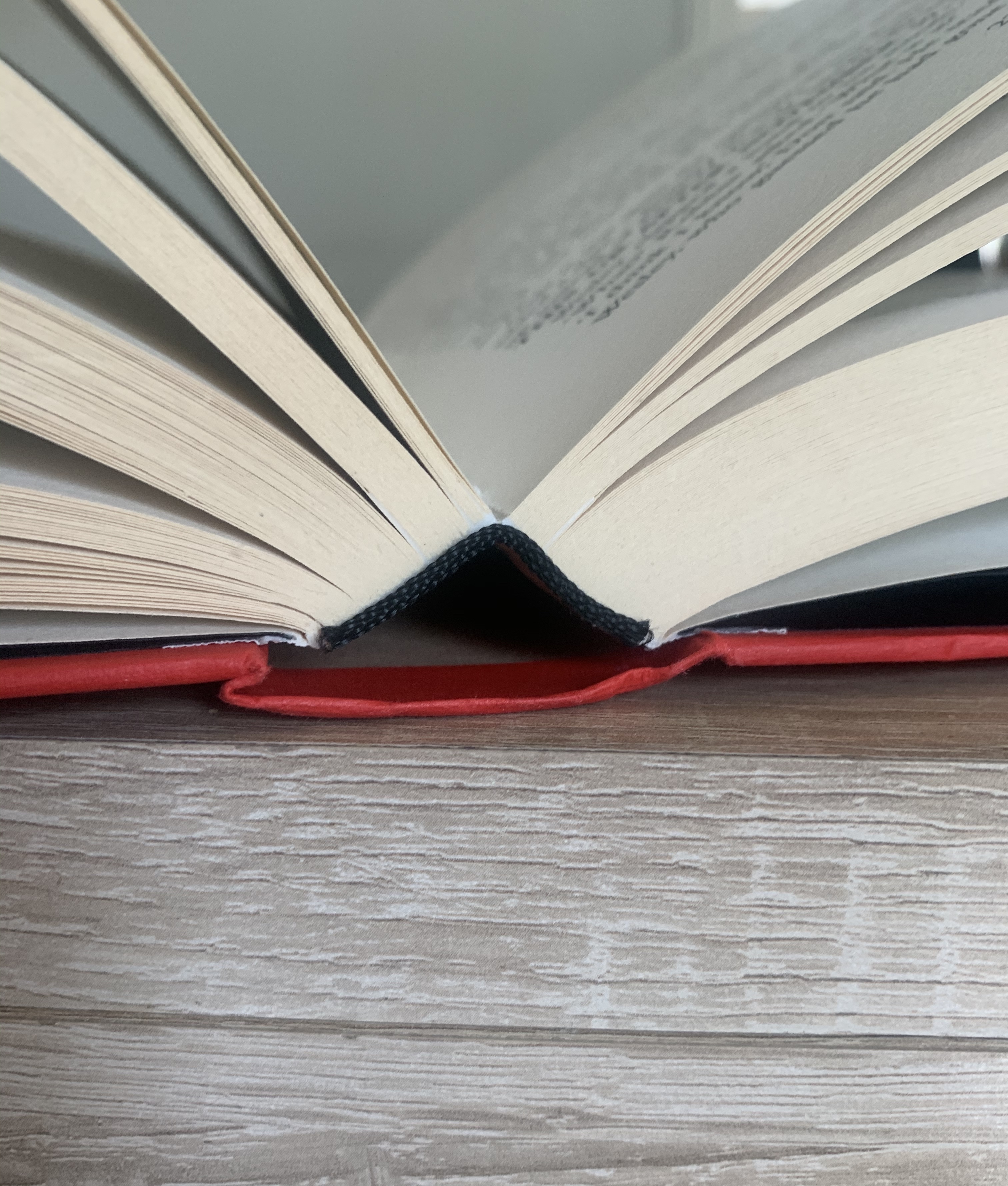
Binding
- Book block glued
- Black headband
- Hardback cloth covered board
- Black embossed title on spine
Paper
- Paper dust jacket
- Black end paper
- Slight curvature cut to the book block
- Uncoated paper inside
Book 7 – Steve Coogan – Easily Distracted
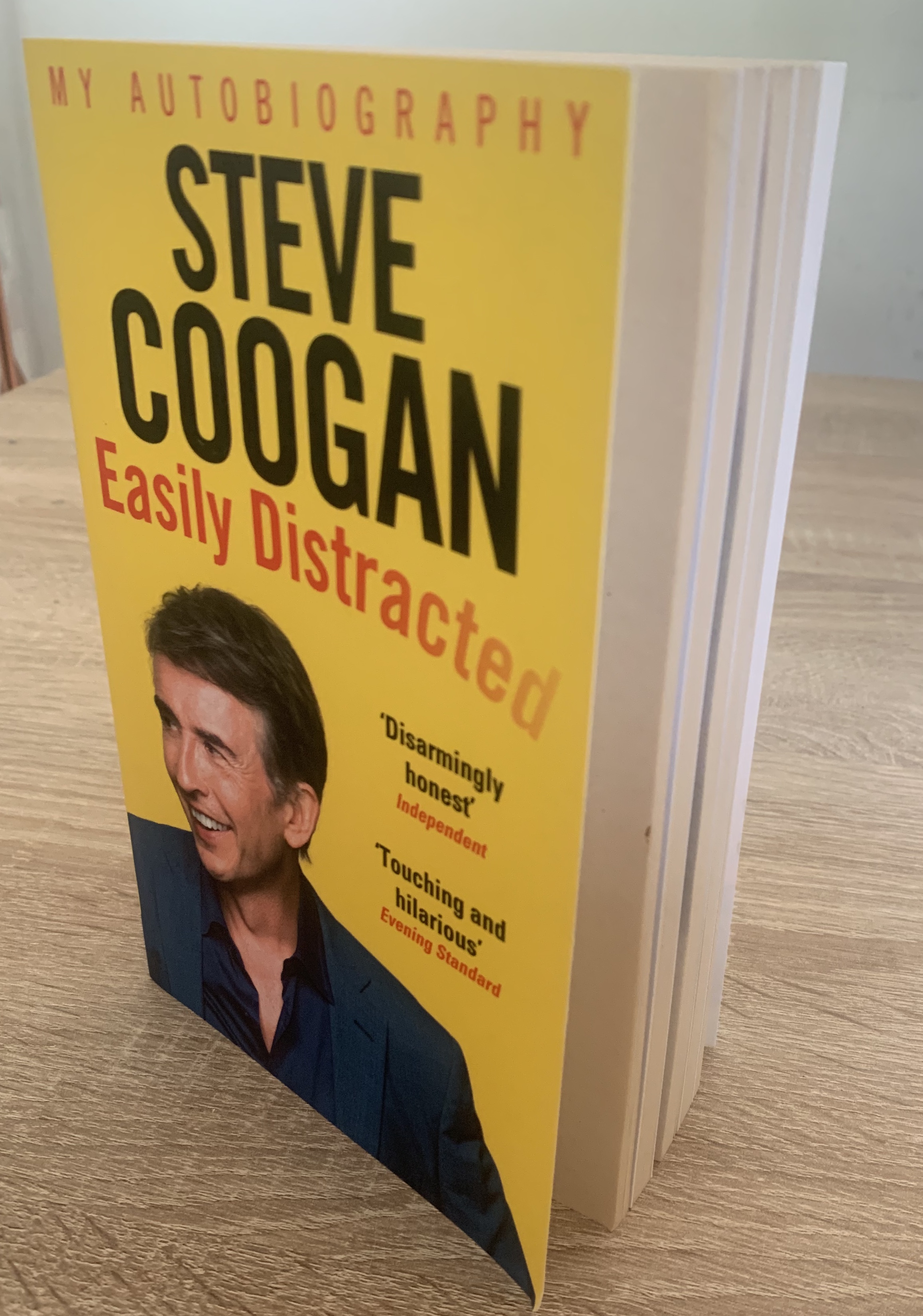
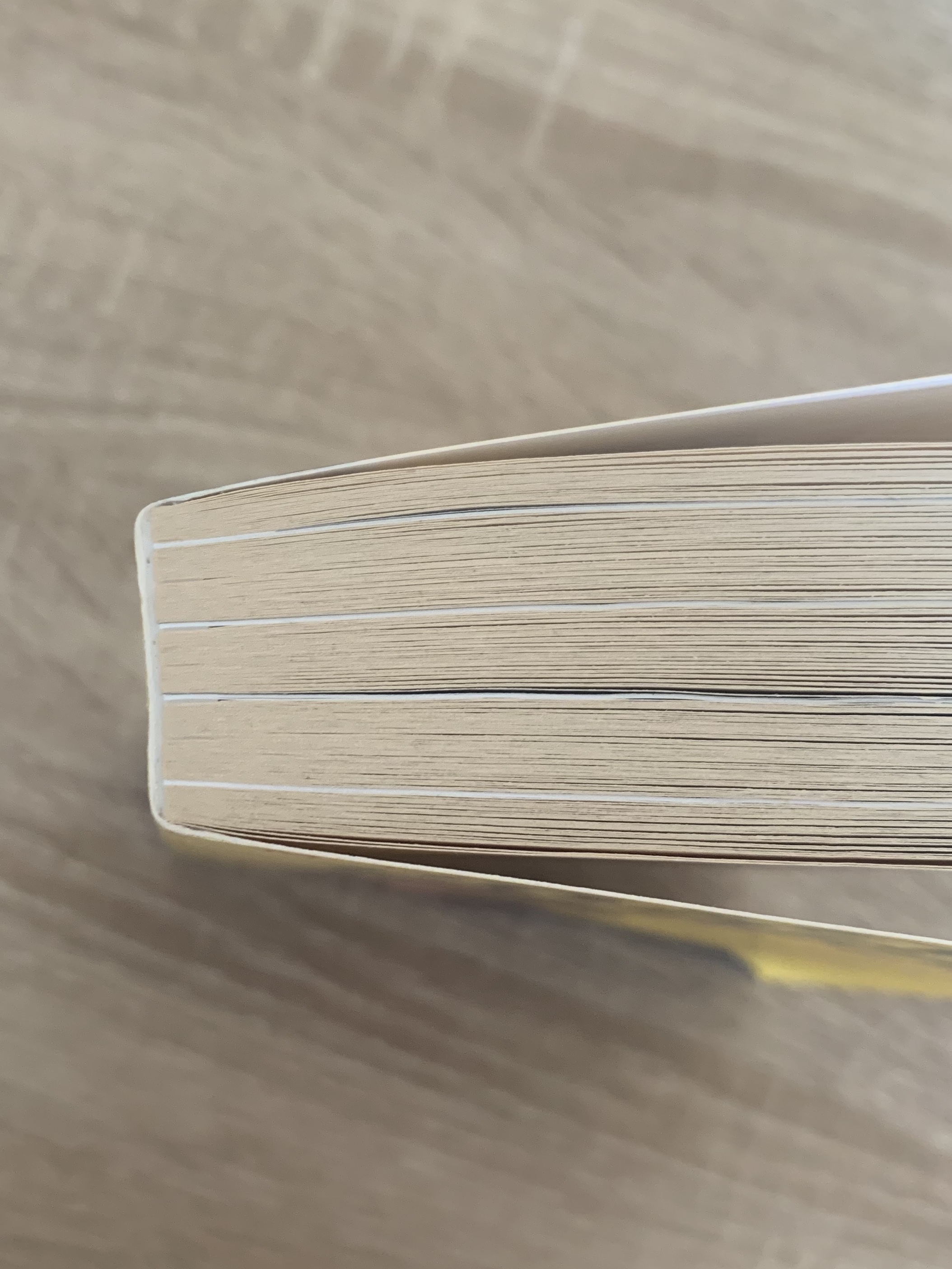
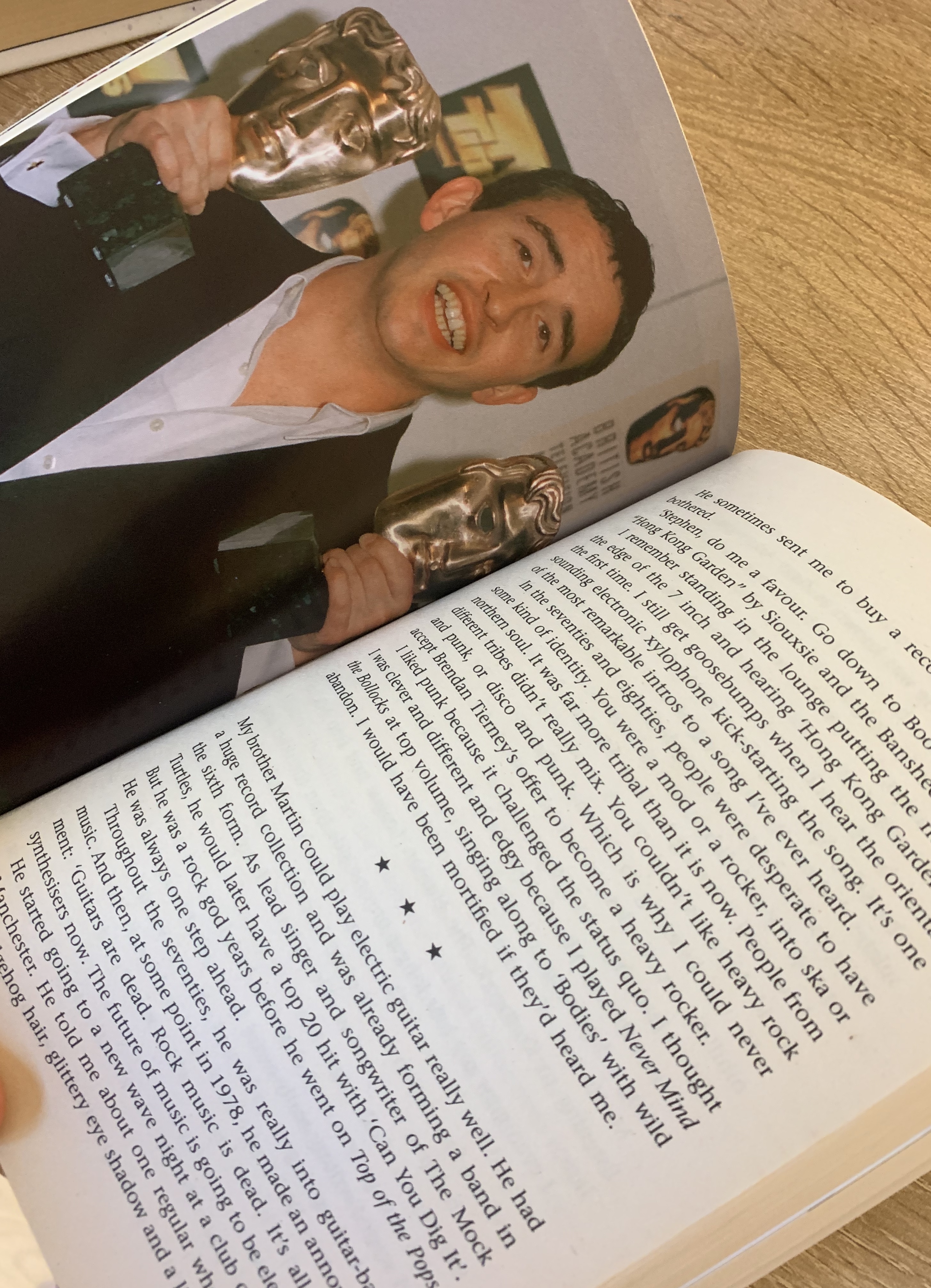
Binding
- Book block glued to the spine
- Paperback cover
Paper
- Matte coated cover
- Uncoated paper
- 21 pages are white gloss paper containing photographs
Reflection
It was interesting to look up close and personal to the books to see how they had been manufactured and what the qualities are. It is clear to see that some books are made better than others. I focused on paper choices in the research point following this exercise.
 rachaelmayesbook.design.blog