
To begin: Collect a wide variety of paper samples and other paper ephemera across a range of weights, textures and surface finishes. This builds on your previous paper sample exercise from Part two. Aim to collect a wide range of unprinted papers, such as blotting paper, tracing paper, lined paper, graph paper, rice paper and handmade papers. Look out for papers with special print finishes – metallic, embossed, shiny and matt. Aim to collect papers that will run through a conventional desktop printer, or indeed the print output options you have available to you – this may include board.
In addition, collect paper ephemera that you find interesting or that appeals to you in some way. This may include tickets, flyers and similar printed material or mementos or souvenirs of exhibitions, occasions and days out. Create a stack of these papers for use in your next few exercises.
In your learning log, document some of these papers and their attributes. Use a reflective approach and simple, descriptive words. For example, it may be that a heavy, coarse coloured paper reminds you of primary school, or the particular smell and shine of a paper puts you in mind of glossy magazines, or the fish and chip shop. Document these associations, however bizarre, into your learning log and/or ongoing paper sample book – you may revisit the words and phrases you use here later on in this process.
Paper Samples
I attempted to collect as many different paper samples as possible, I ordered some different textured paper samples from http://www.papermilldirect.co.uk and also some paper bag samples from http://www.carrierbagshop.co.uk. The following images show my samples along with a very brief description and a few notes on how different papers remind me of different things.
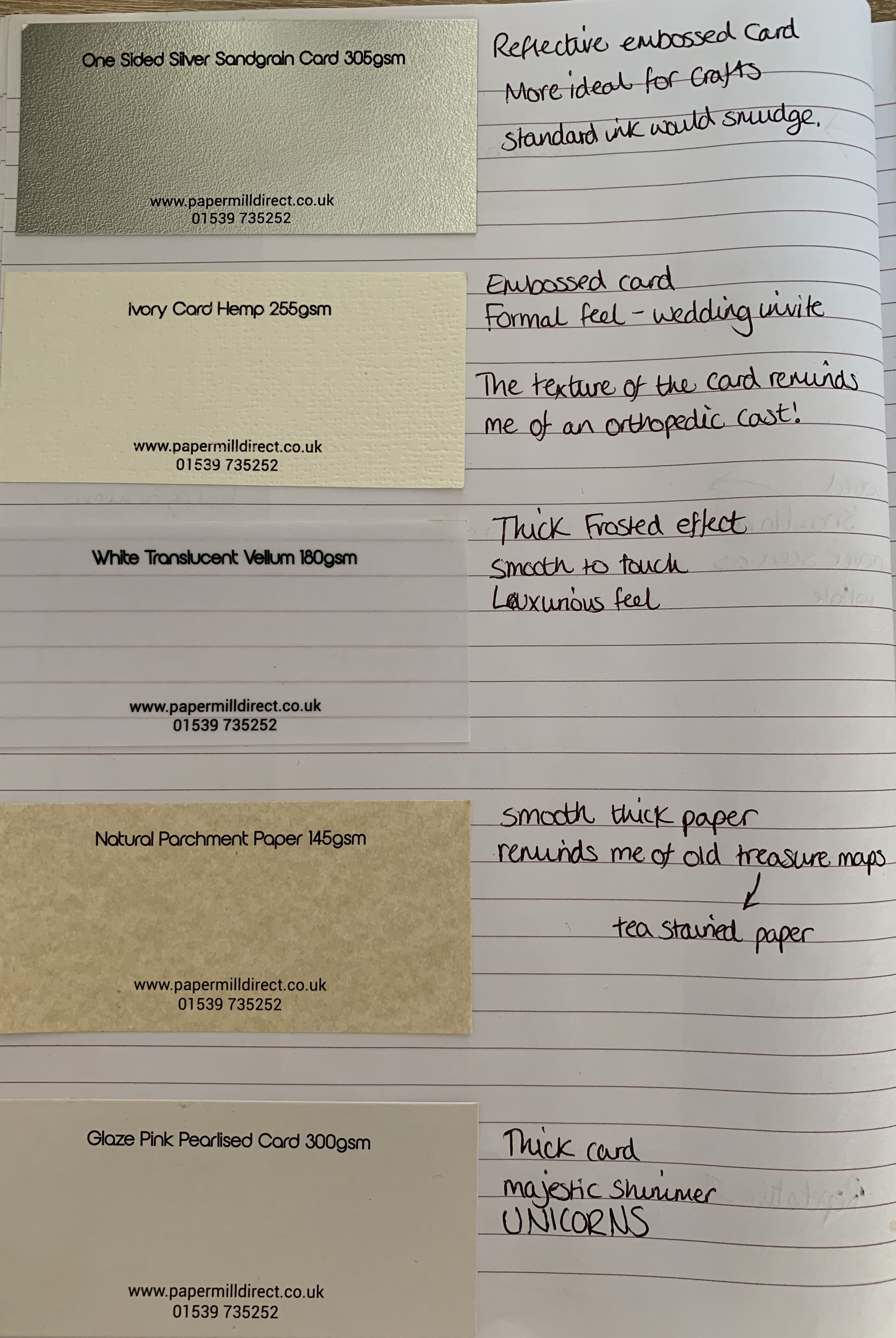

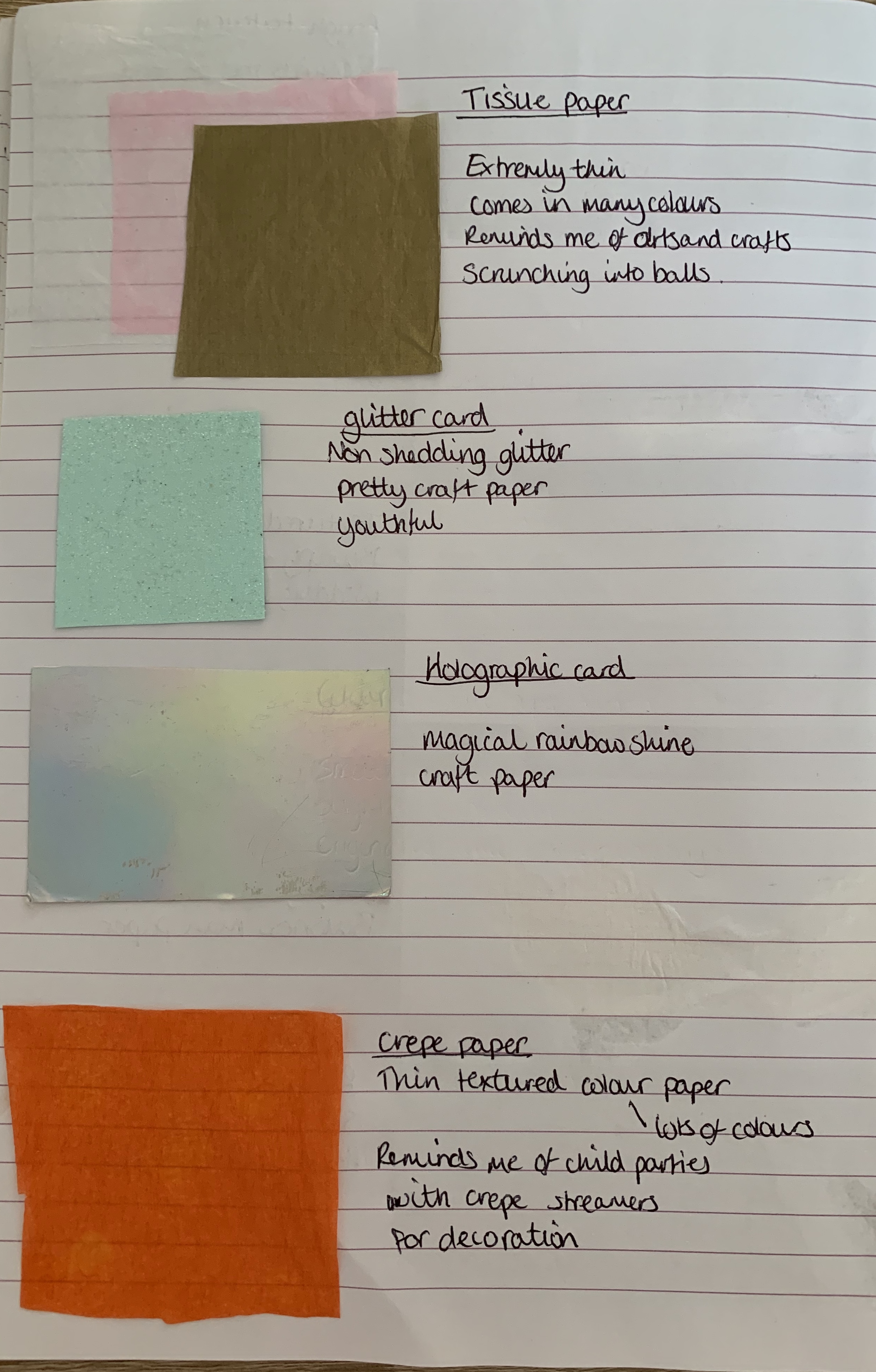
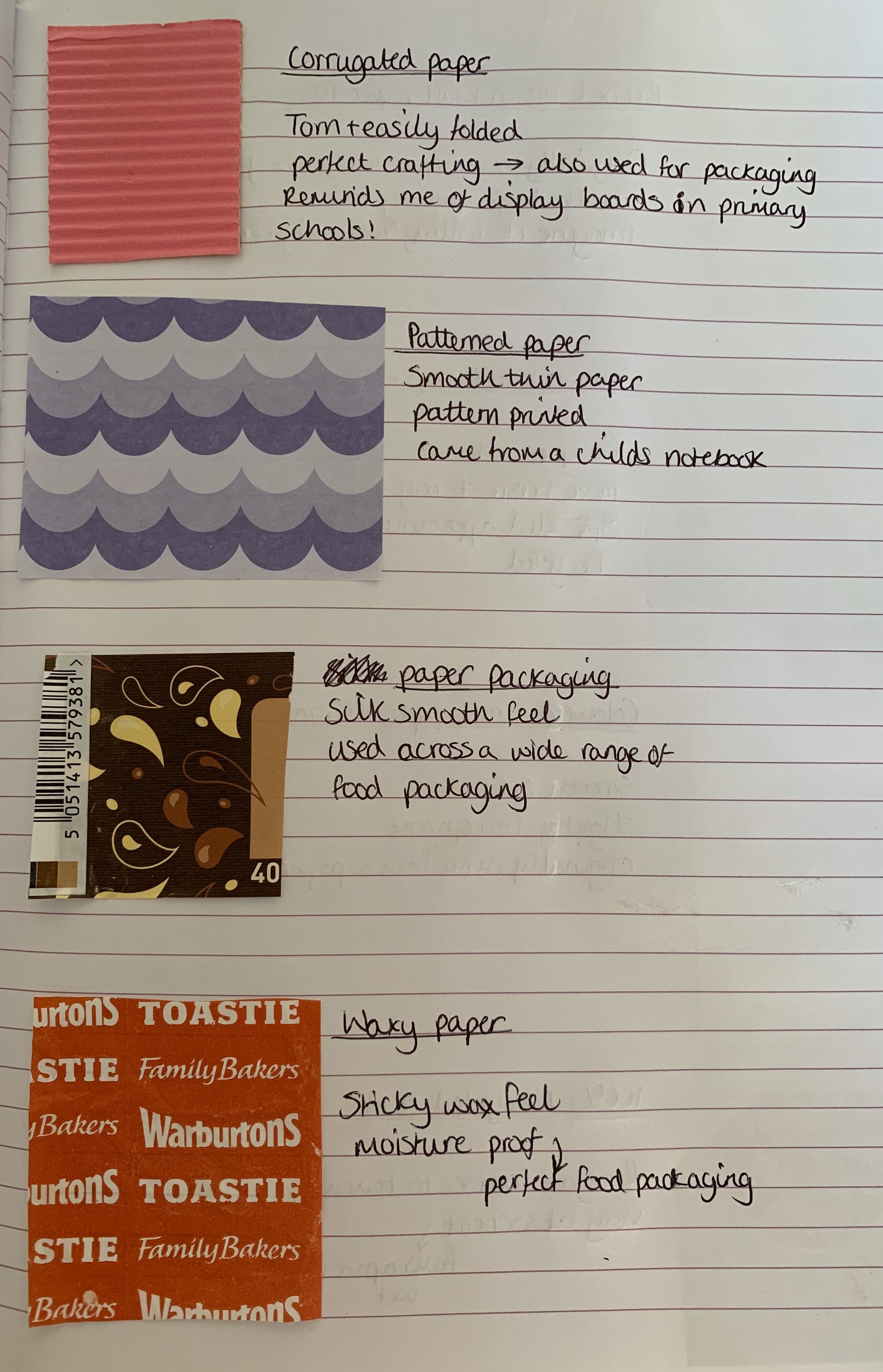
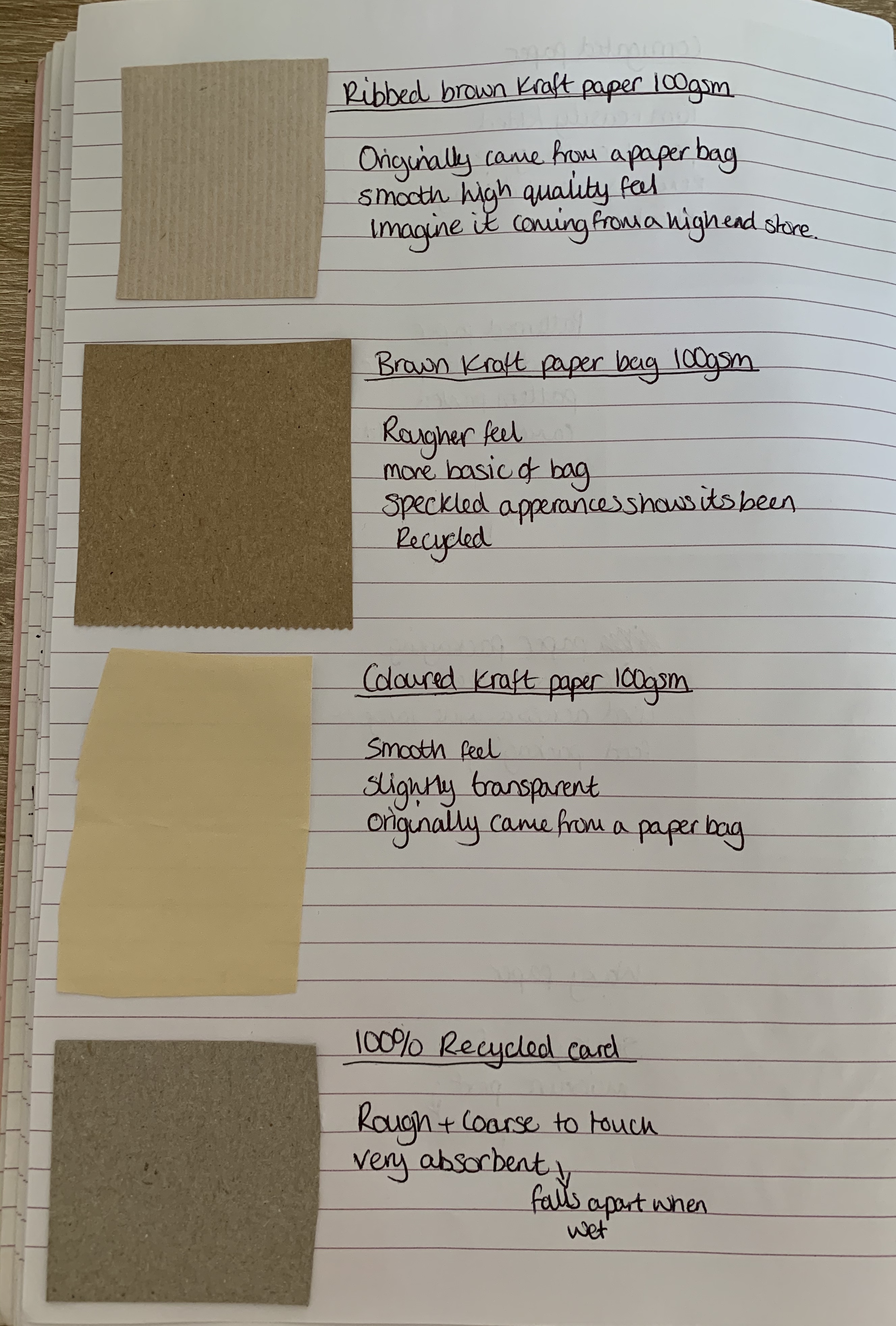
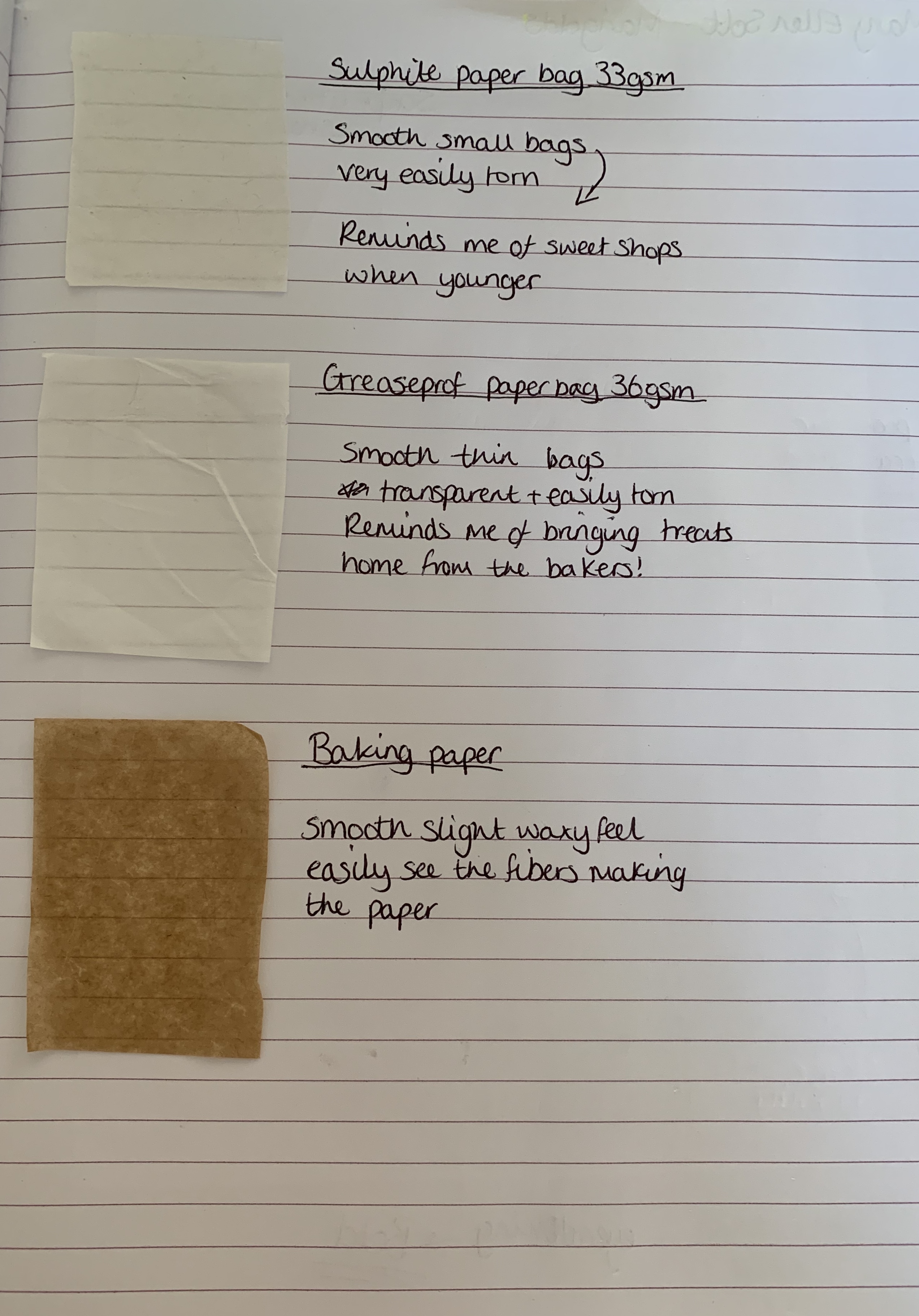
Looking at the paper samples I have collected made me question if they would be appropriate to print in a regular printer. Although most would feed through the printer, how the ink would hold is another question for papers such as the silver sandgrain card, holographic card, pearlised card and the waxy papers I imagine would smudge very easy. The tissue paper, glitter card, crepe paper, corrugated paper, sulphite paper and greaseproof paper would need to be possibly hand printed as these wouldn’t feed or survive being ran through the printers.
Paper Ephemera
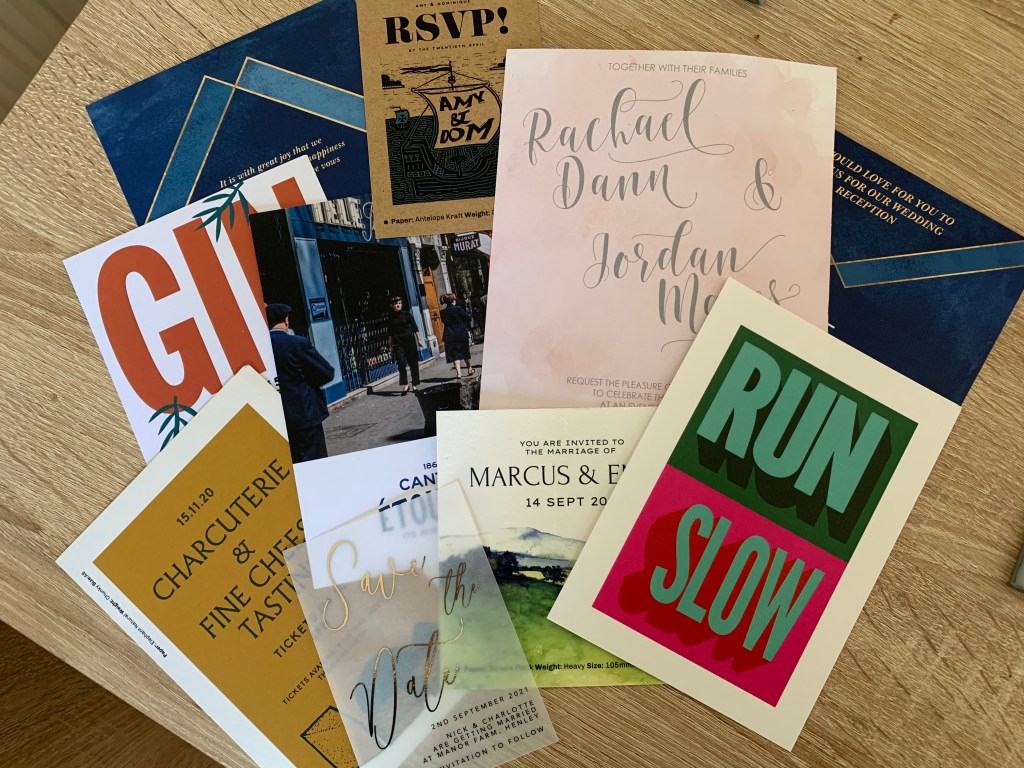
Thankfully for this part I’m glad I can sometimes be a bit of a hoarder! I love to keep mementos of days out and events. Below shows examples of my paper ephemera.
I also have stored away which I will dig out for the appropriate exercise tickets, postcards and maps.
Reflection
I was useful to revisit paper samples but this time by seeing what each reminded us of. Due to having two young children it was useful to explore different paper types within their craft boxes – when I concentrated on these items it brought me back to my childhood and mainly primary school. I’m glad to of collected a wide variety of samples, although some are not appropriate for print it was still useful to explore the different papers available.
 rachaelmayesbook.design.blog