
Brief: There are two elements to this exercise – thinking about how you produce your publication, and making a smaller scaled down version as a mock up.
Creating a small mock up: Printers use large sheets of paper to print multiple pages, which are then cut and folded. You’re going to use a simple A4 sheet to recreate the process of imposition and folding into ‘sections’ or signatures at a smaller scale.
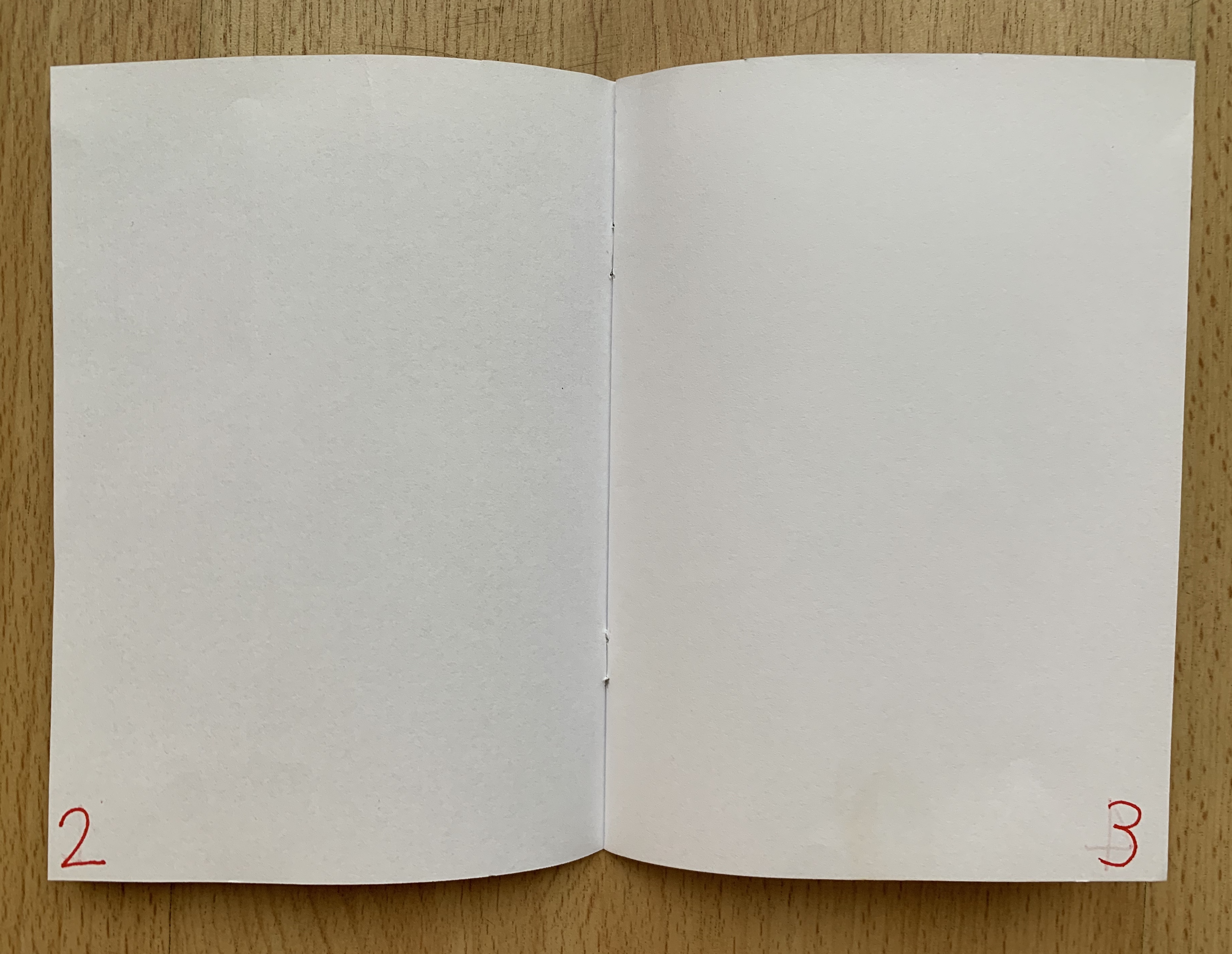
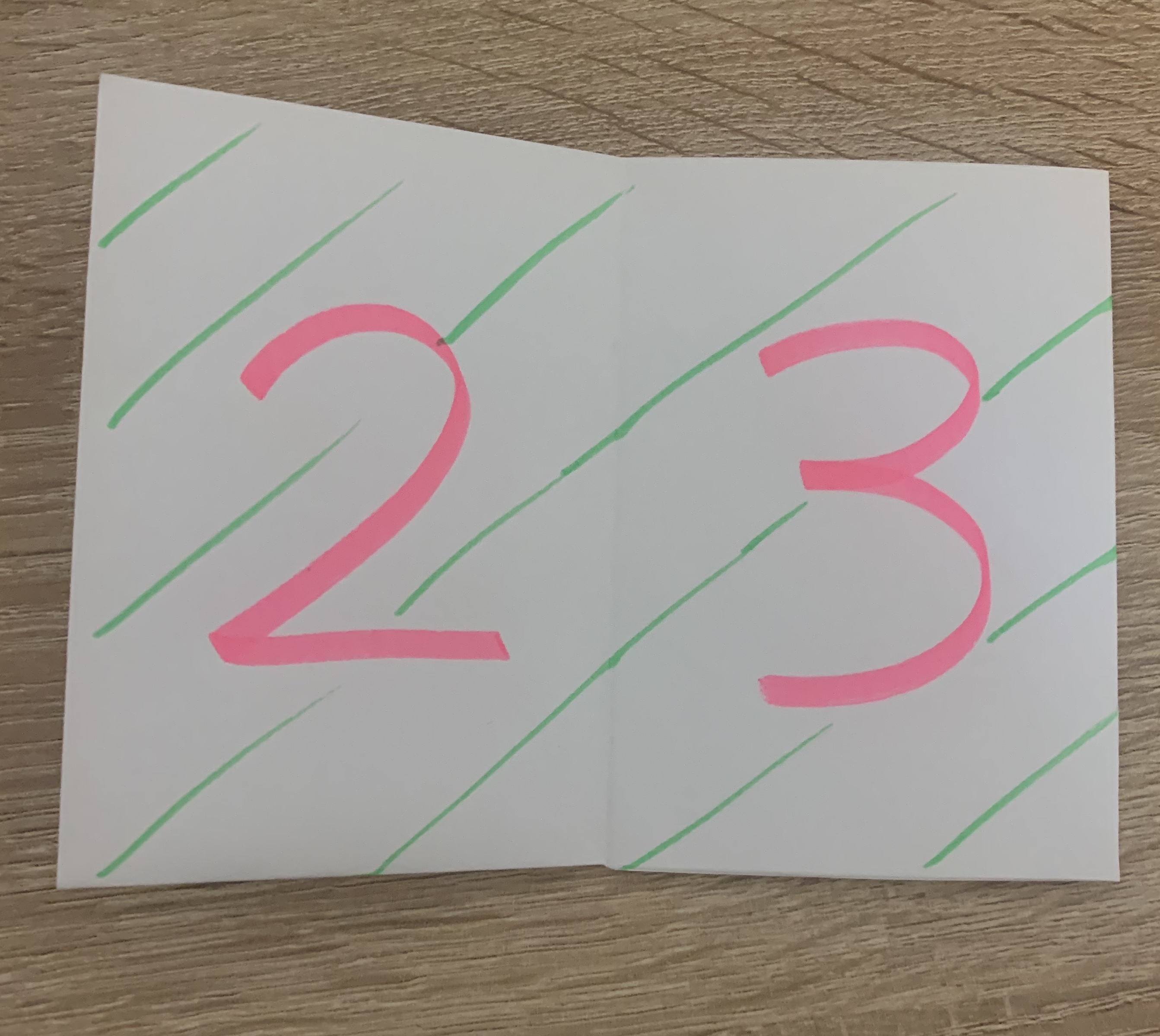
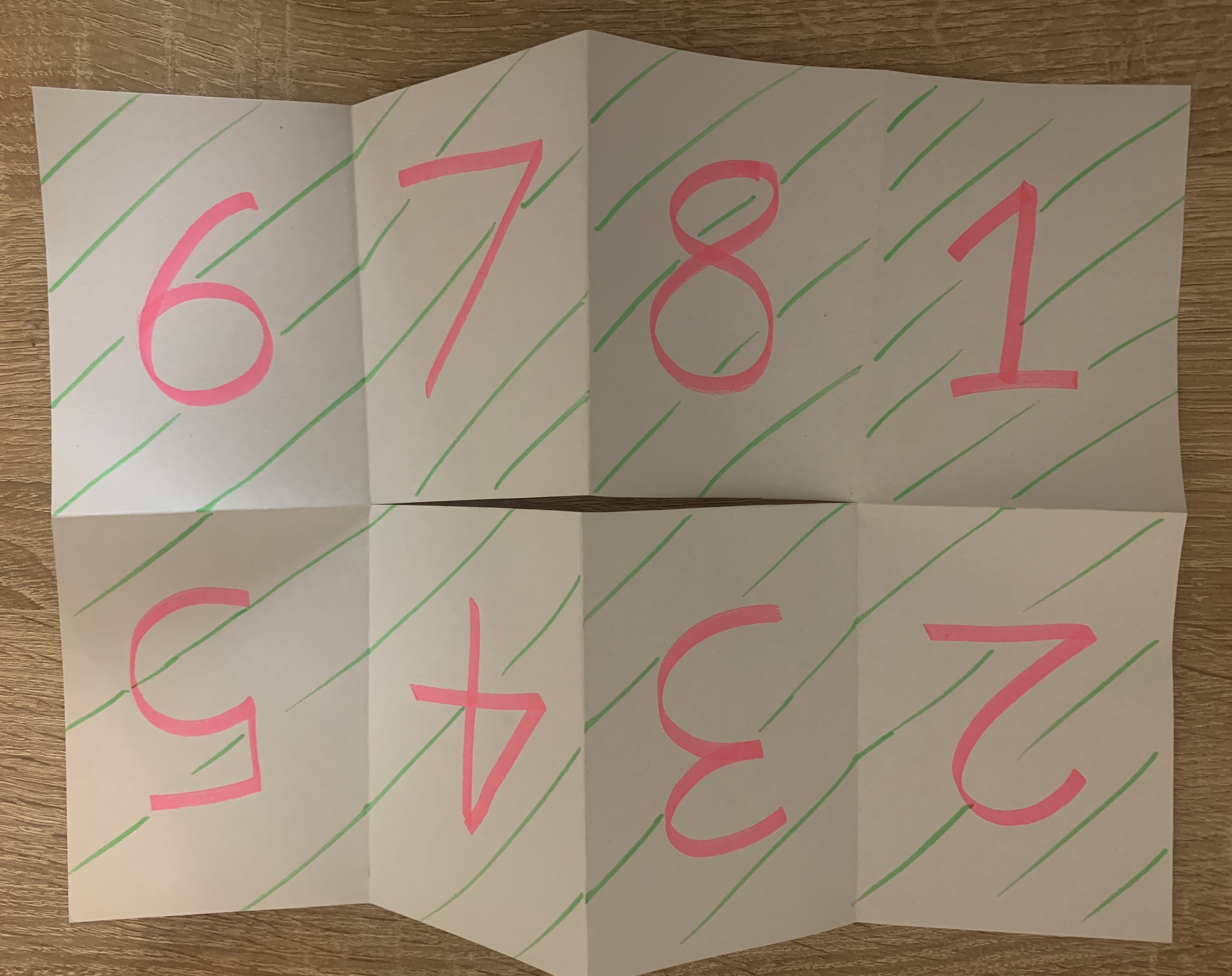
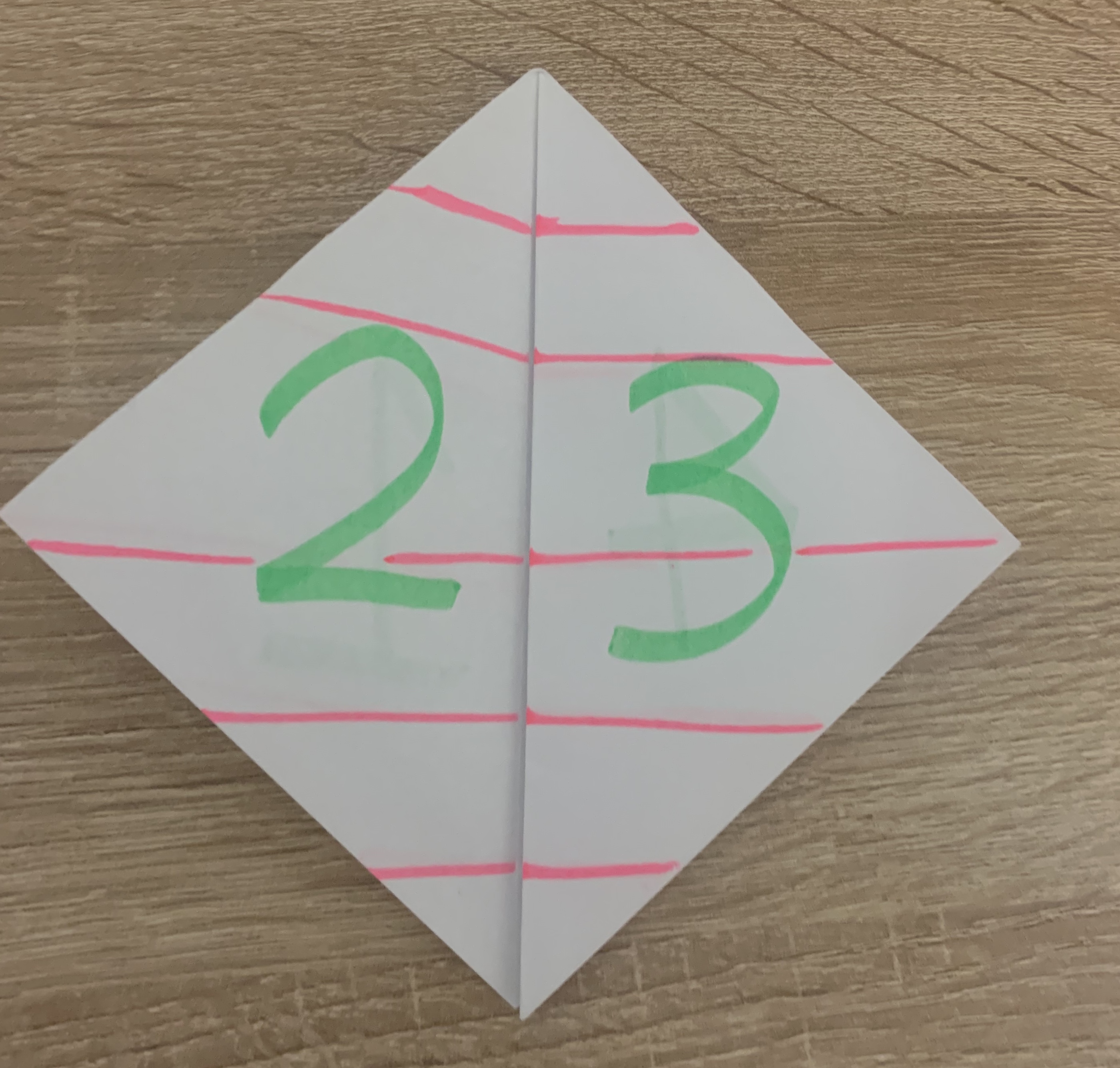
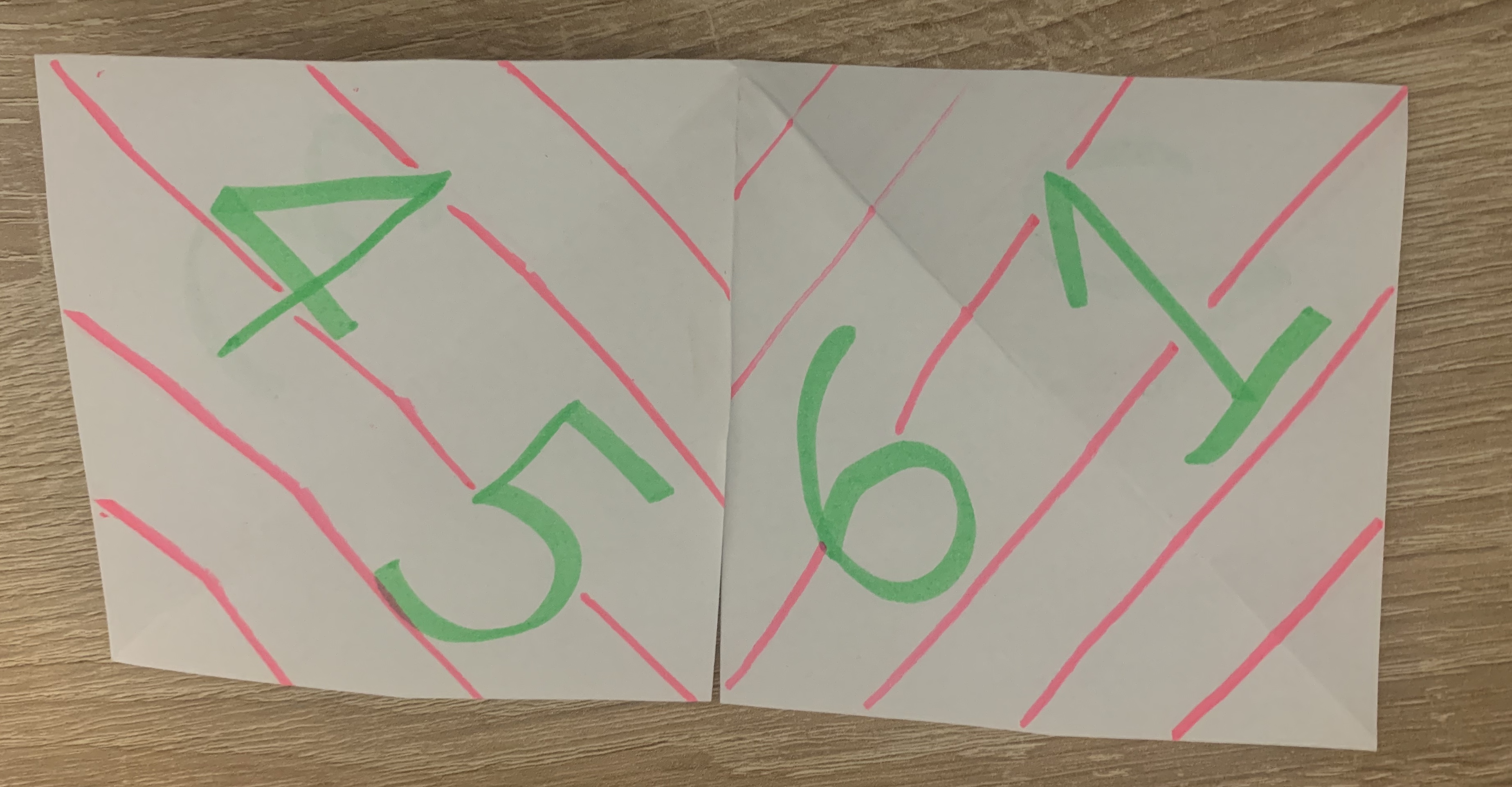
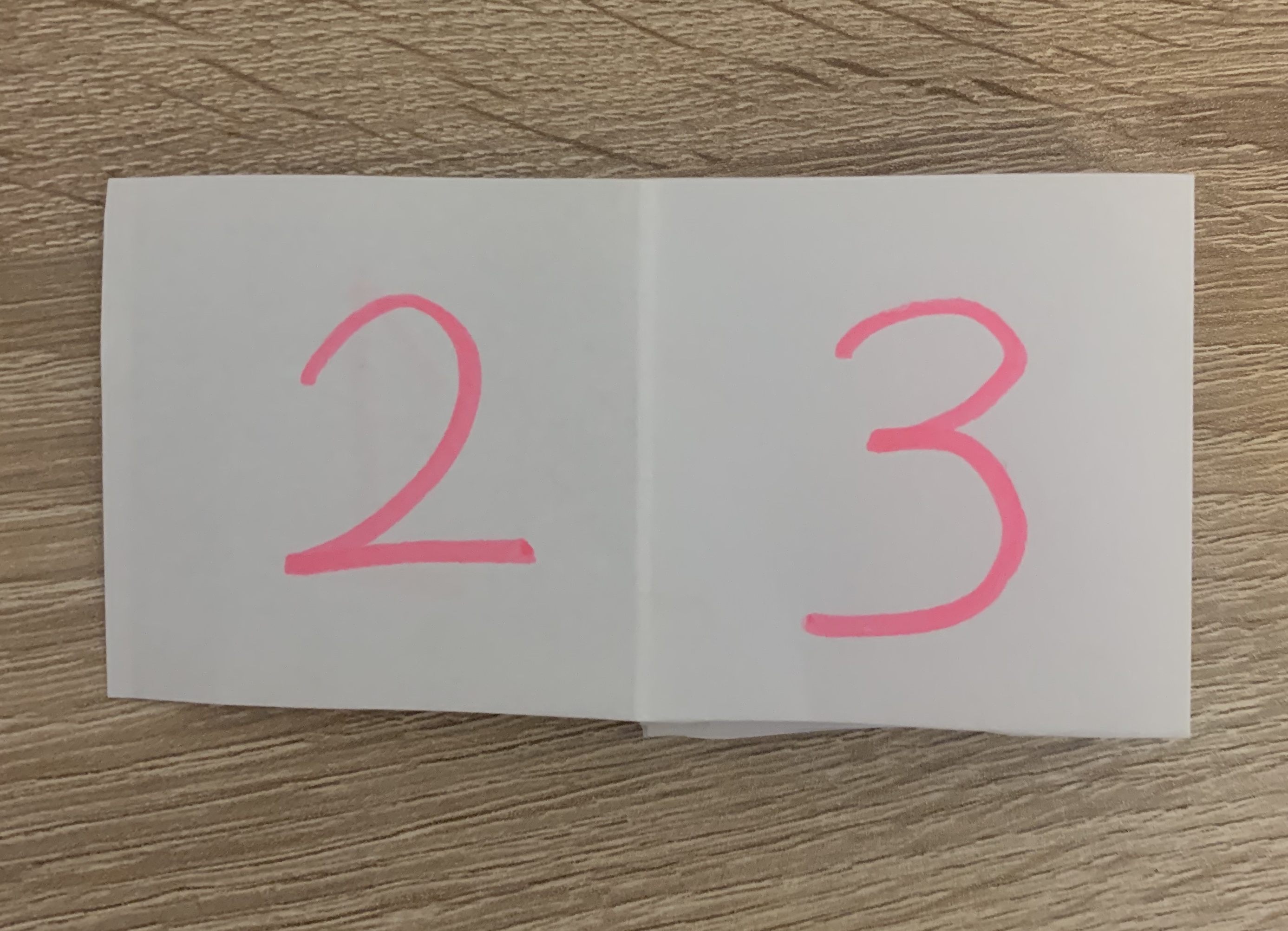
Fold an A4 sheet of paper in half, to create an A5 sheet. Now fold it in half again, so that you have an A6 size. This will comprise four leaves and eight pages. A page has a recto (facing) side and a verso (back) side. The terms recto and verso are also used to describe right-handed and left-handed pages in a double-page spread. With the sheets still folded, number the pages as they would read, from page 1, the front, through to page 8, the back. Now unfold the pages and notice how the numbers are distributed on the outspread sheet. This is a very rudimentary form of imposition, but the principle is essentially a miniature version of the same process within print production. By refolding your A4 sheet and then cutting the folded edges, you create pages, which can be stitched or stapled at the centre (gutter) to form a rudimentary book.
Books are constructed from folded sheets in this way, each on of which creates a signature. A signature is a section made up from a folded sheet which will create pages when guillotined. Signatures are built up in 2, 4, 8, 16, 32 or 128 pages then stacked up in sequence and glued or stitched (or both) across the back edge to form the book block, which is then bound to the cover.
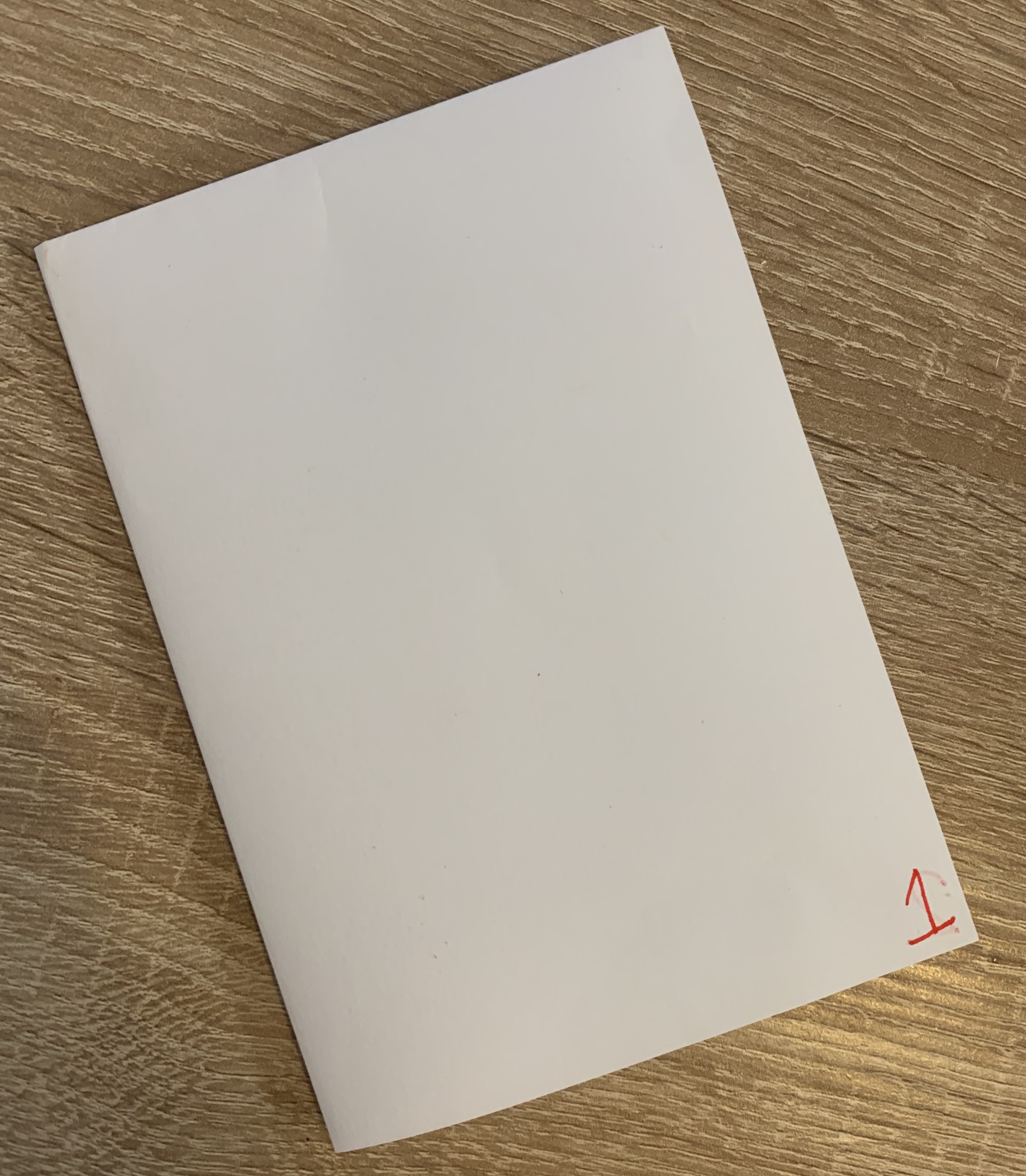
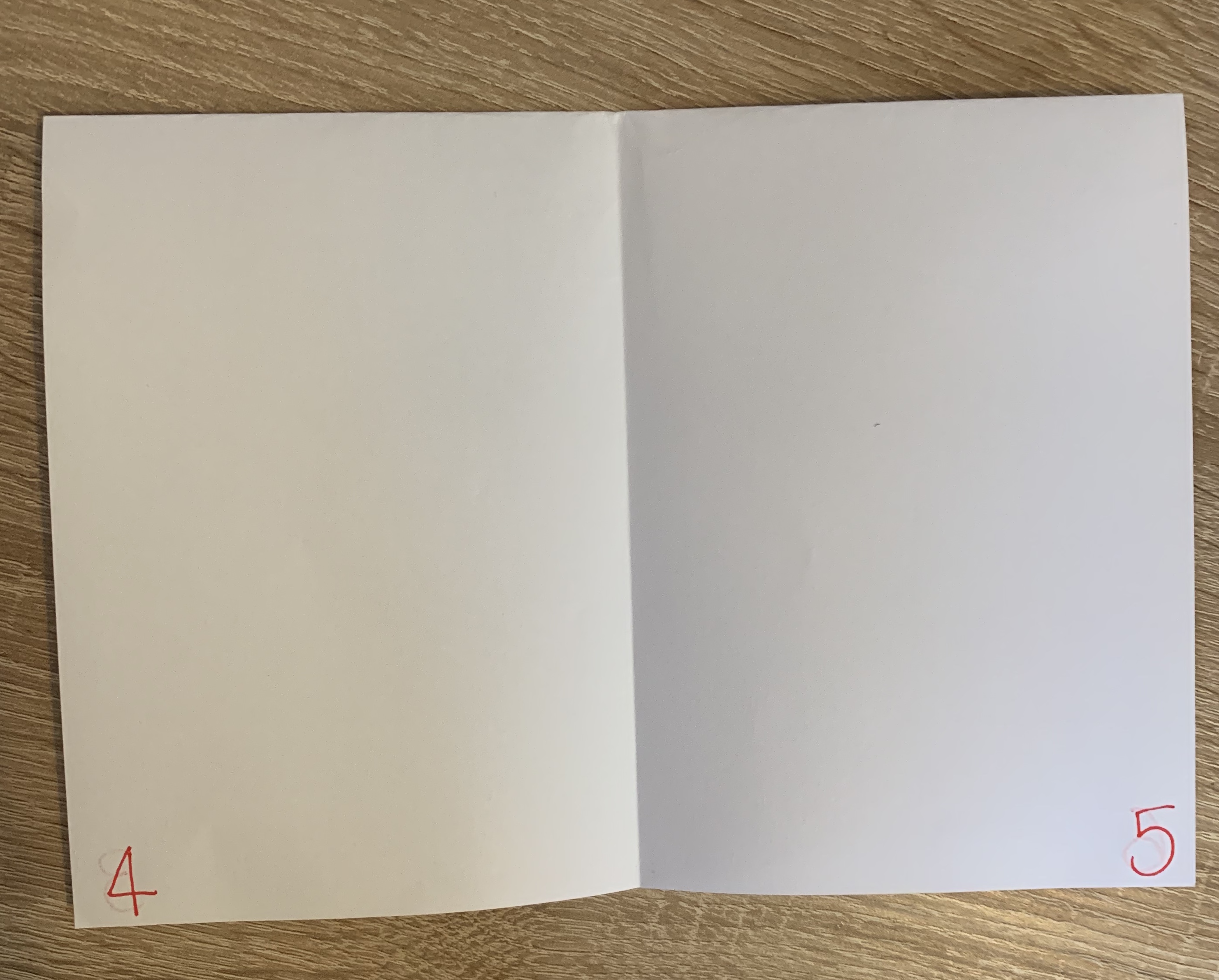

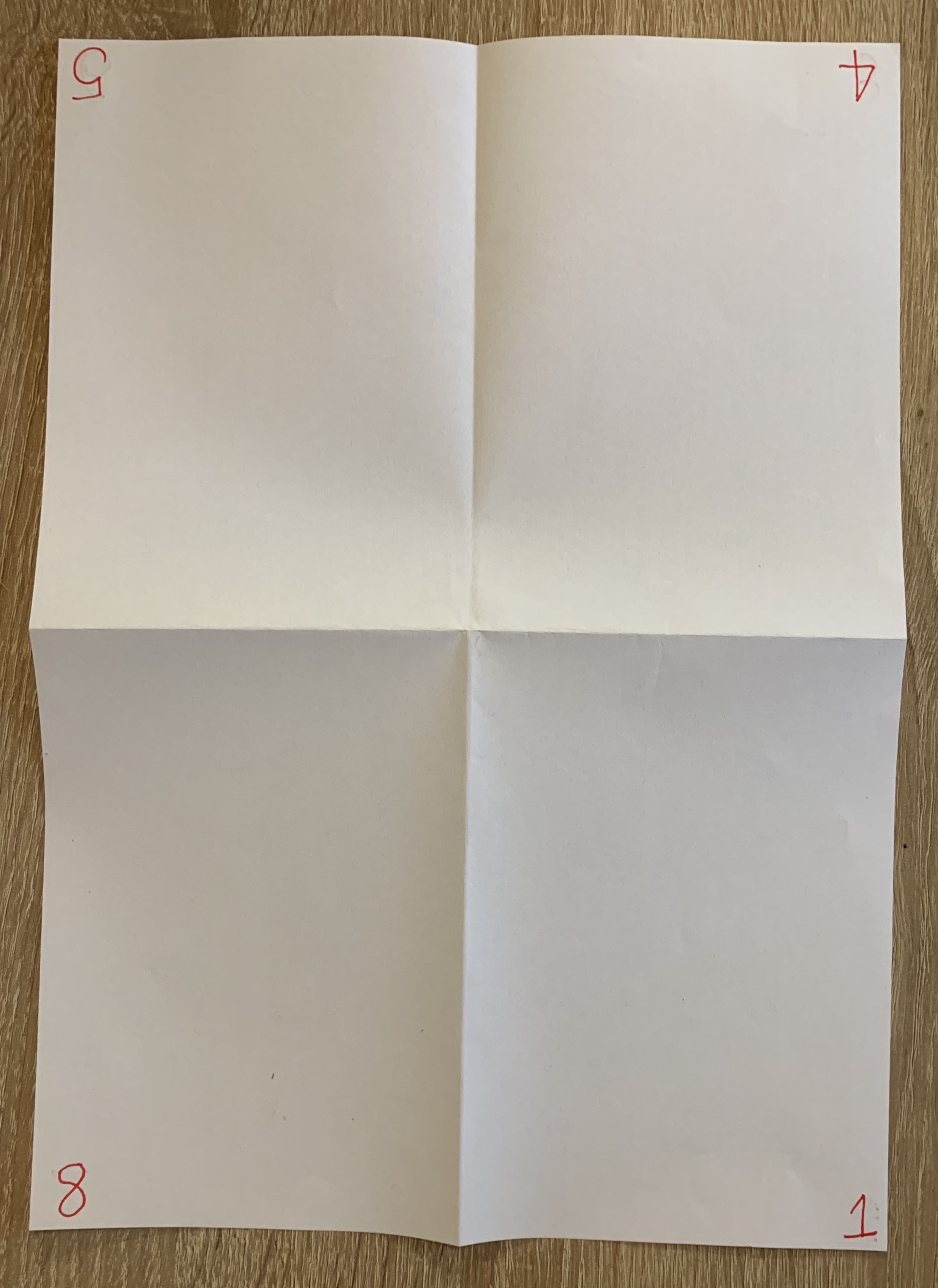
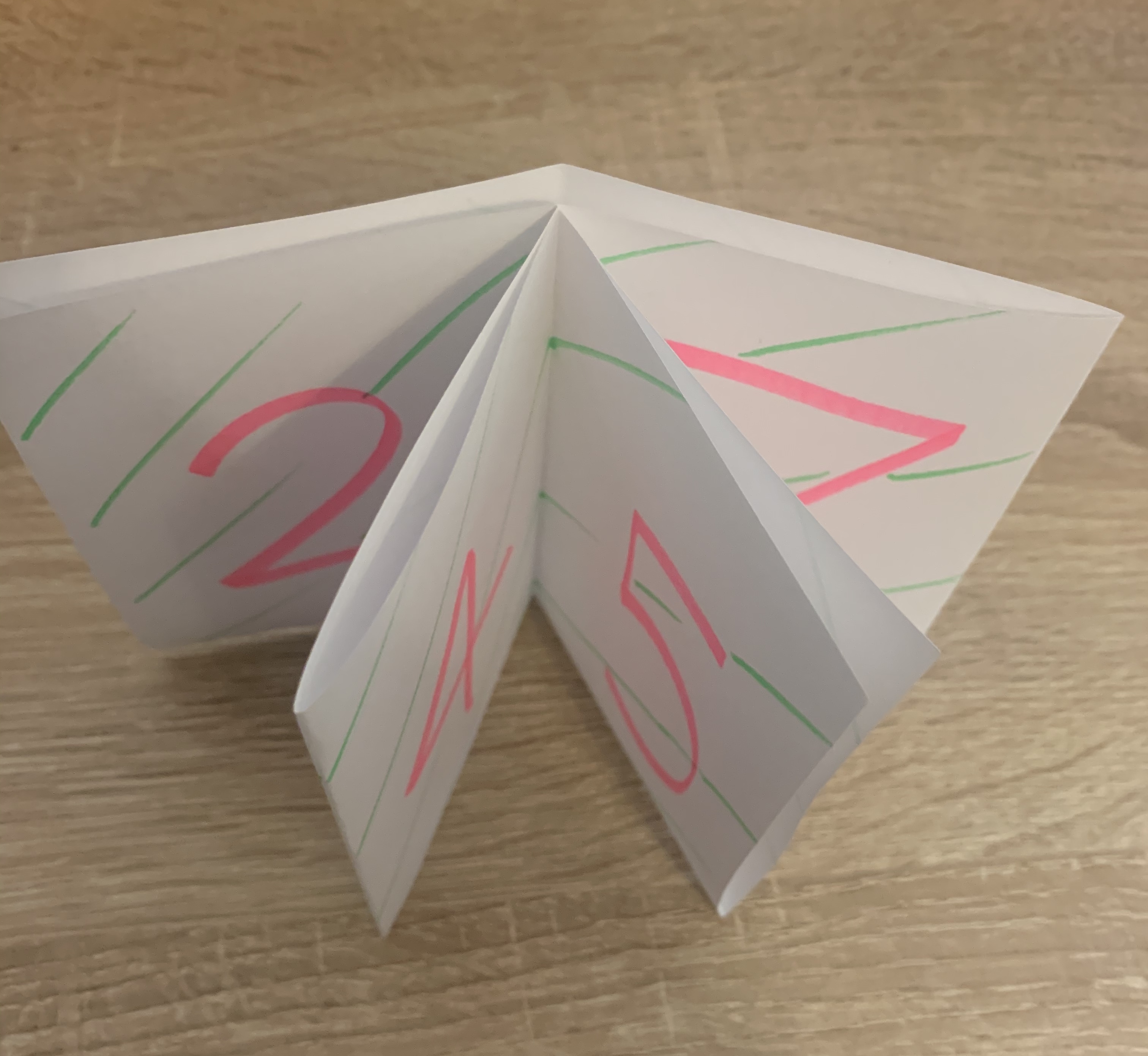
I then stapled the paper along the gutter and cut the pages, creating a book.

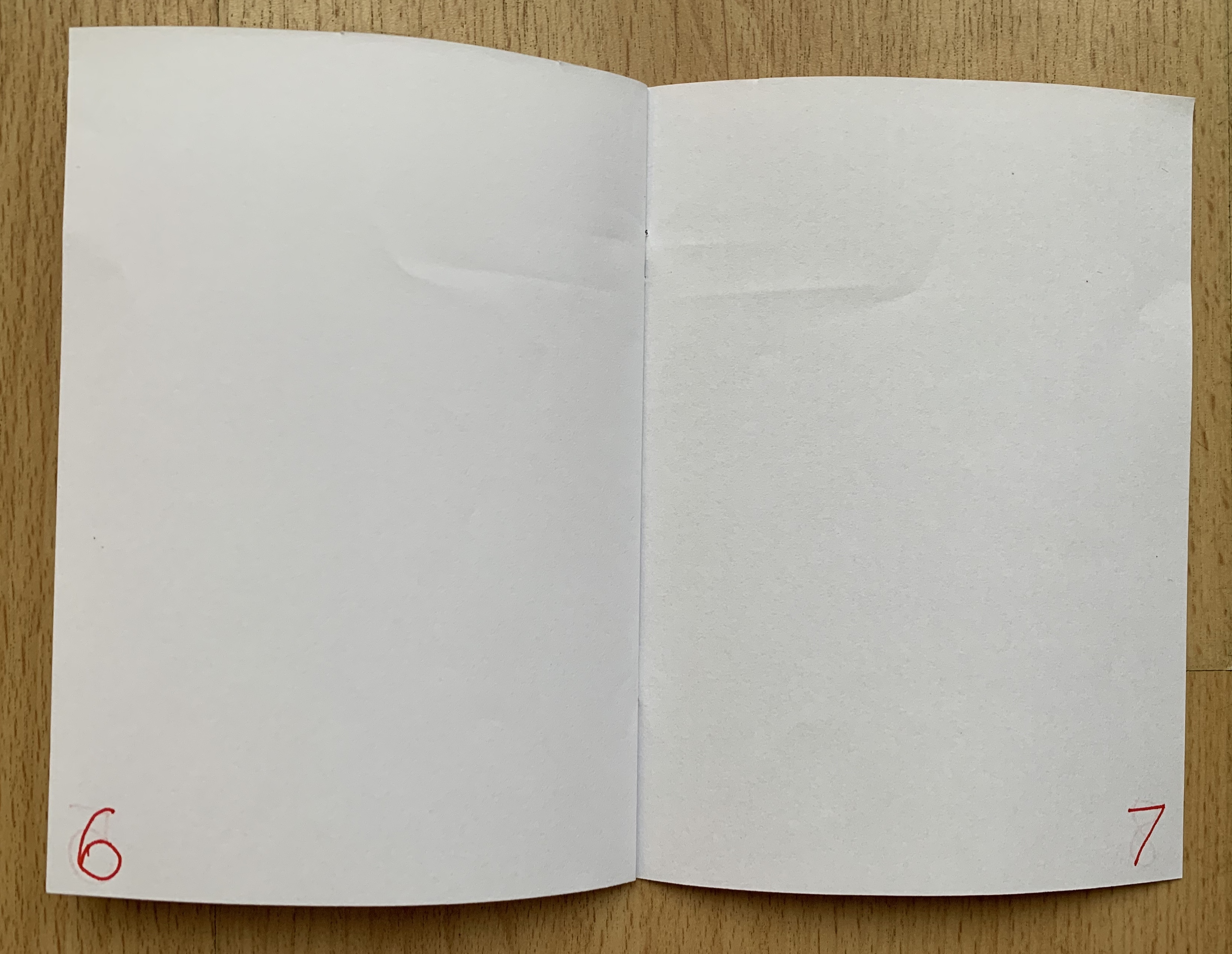
Creating a full scale mock up: To create an A5 pamphlet with 16 pages take four A4 sheets together, and with the sheets positioned landscape, fold in half. Stitching or stapling on the fold will secure the sheets and form your publication.
Additional pages can be added, but there is a finite number that can be slotted together before you notice how the folded pages start to stick out from the non-folded edge. This can be remedied by trimming the edges of your pages. For professional book designers working on large publications, this process needs to be taken through binding choices, and carefully adjusting page designs across the whole document.
Number each of your sixteen pages from front to back cover. Unpack the document and notice how the relationship of the numbers on the front and back of each sheet. For example, 1 and 16 should be alongside each other, with 2 and 15 on the reverse. These numbers dictate where your content will go, and how this content needs to be printed, and are known as ‘printers pairs’.
Translating your DTP artwork, which has been produced in chronological order, 1-16, into the format needed to print your publication, is known as pagination. Commercially, printers often undertake this work, but as designers, it is also useful to understand how pagination works. A simple way to approach this, is by taking the overall number of pages (often including the covers), and add one. So for your sixteen page booklet the magic number is 17. Go back to your mock up and add up your page numbers – each of your spreads should add to 17.
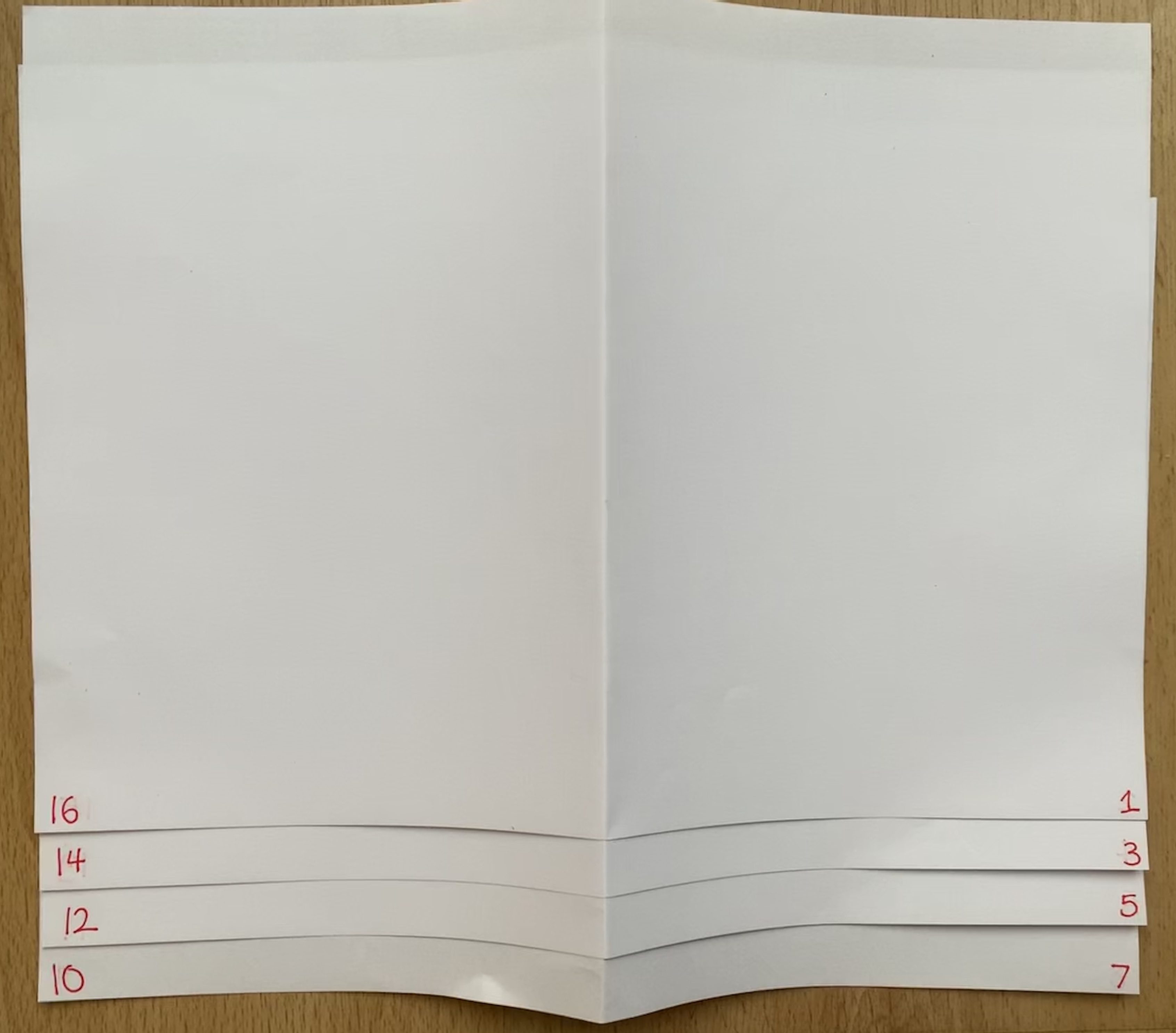
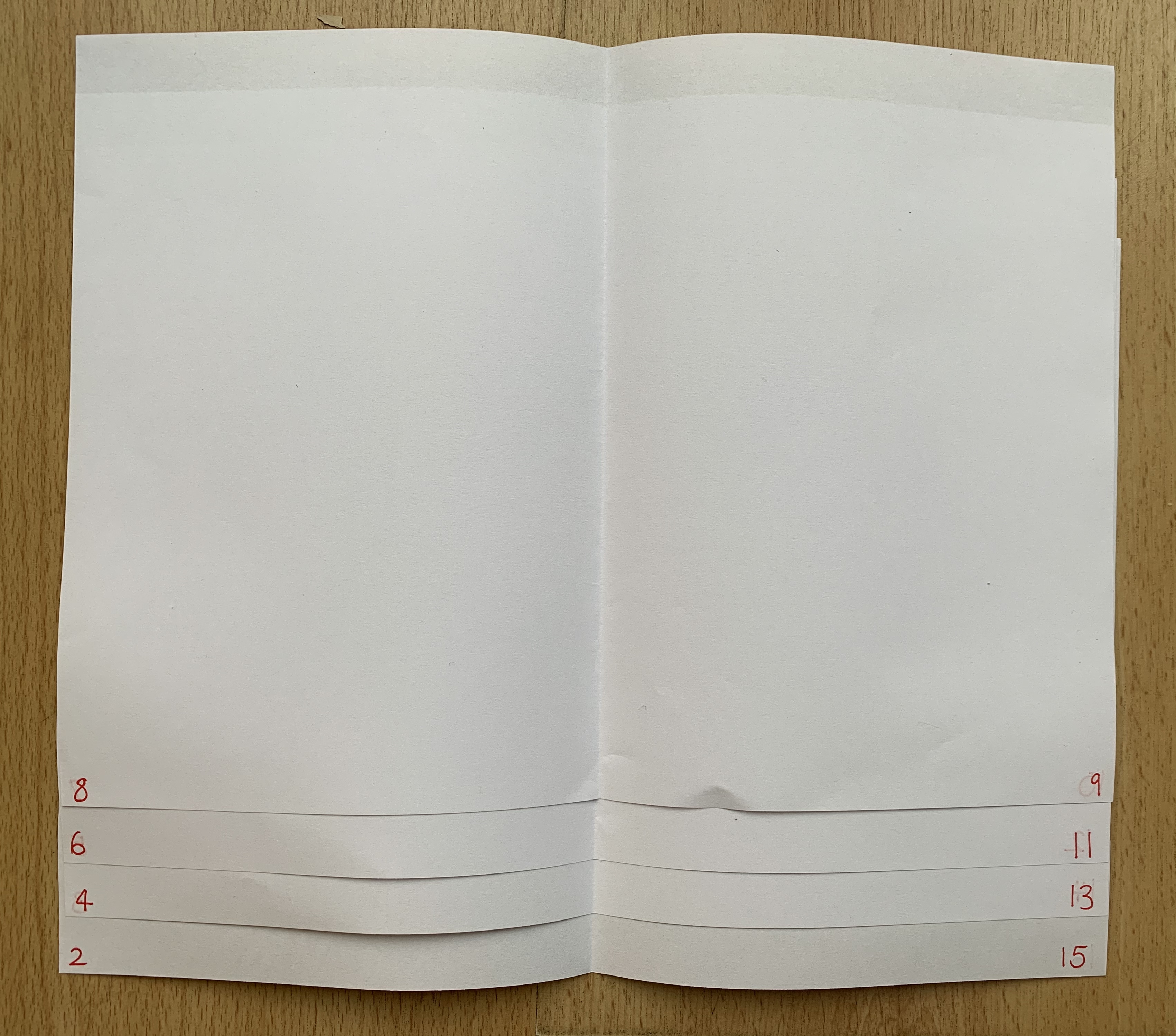
After creating these folds it made me think of other ways to fold documents which wouldn’t necessarily be books but perhaps leaflets.
Whilst looking for folds I came across a really interesting Youtube channel called FoldFactory. They have some amazing examples of different folds which can be achieved. Although these aren’t tutorials, with practice and common sense you can easily achieve folds the same. Below is the link to their Youtube channel.
https://www.youtube.com/channel/UCYR6606Sc3_qU2gyRi7rHdA
I wanted to test out a few different folds which I found simple yet satisfying.
Broadside Booklet Fold (8 Pages)
This fold works really well, also when unfolded it is laid out in an easy to navigate way by starting with one corner square and working your way around the page.
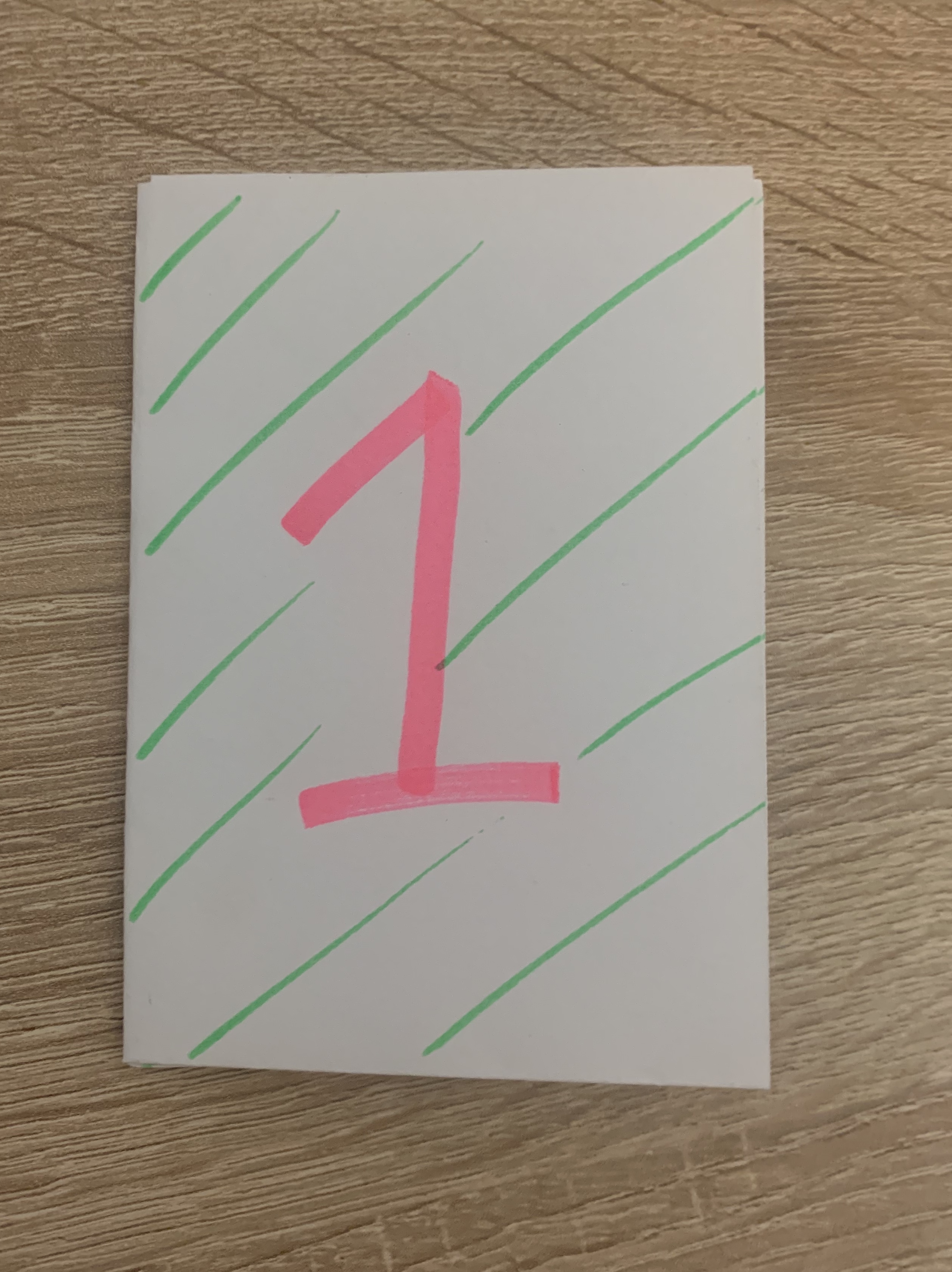
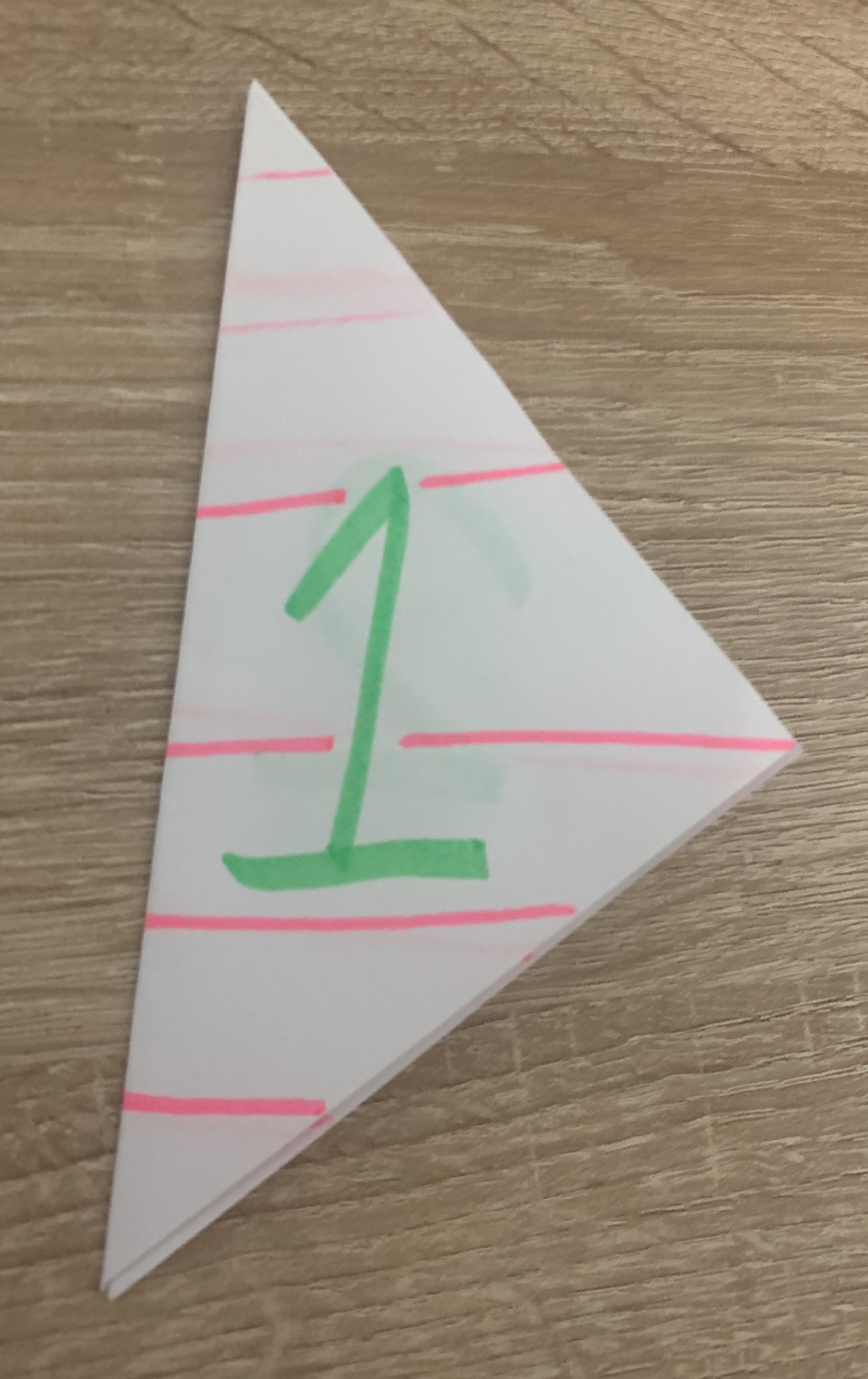
Triangle fold (6 pages)
Although this obviously wouldn’t work as a book, it is still and interesting and easily done fold. Possibly the weakest out of the 3, however I was still pleased to experiment with it.
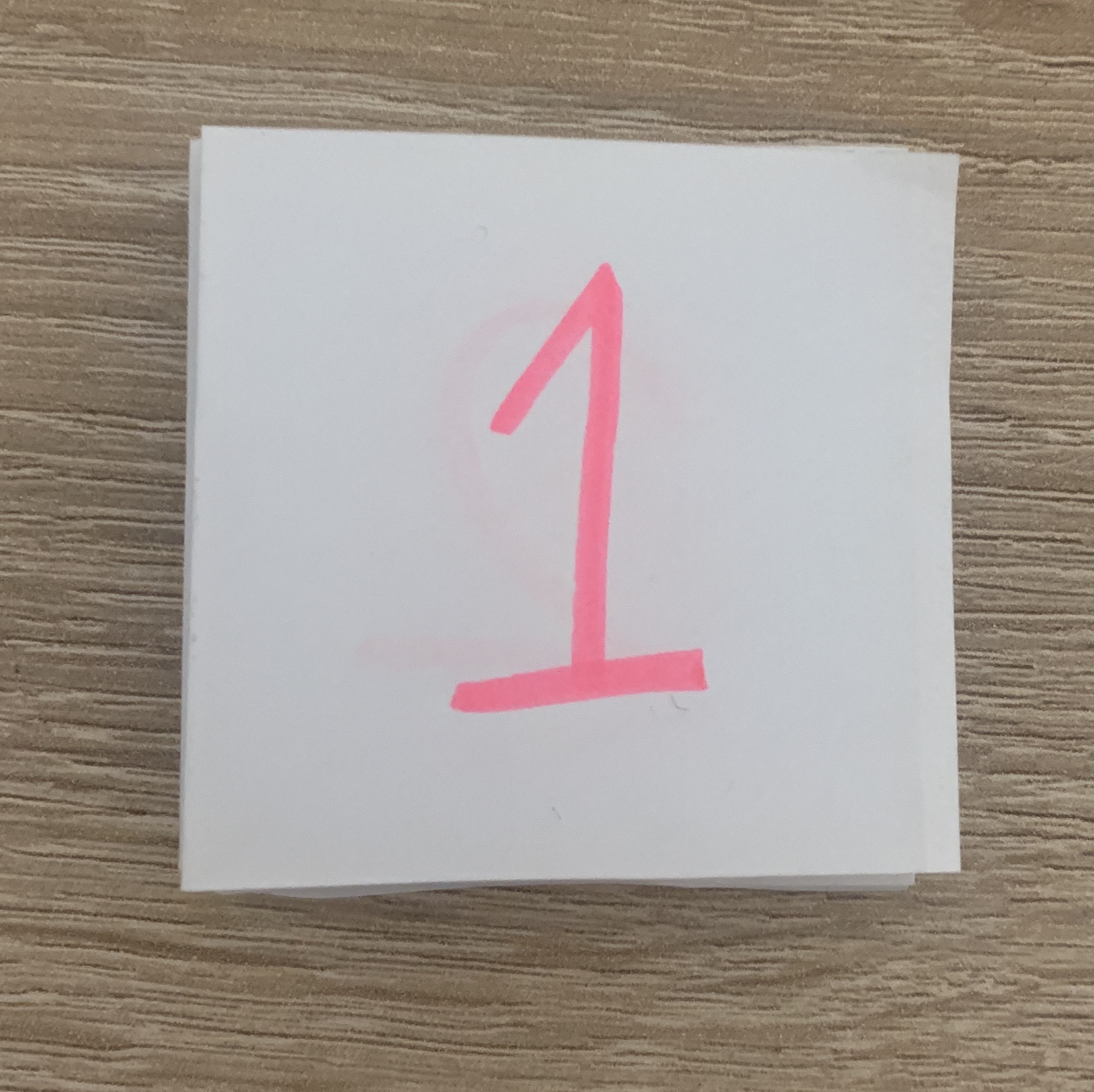
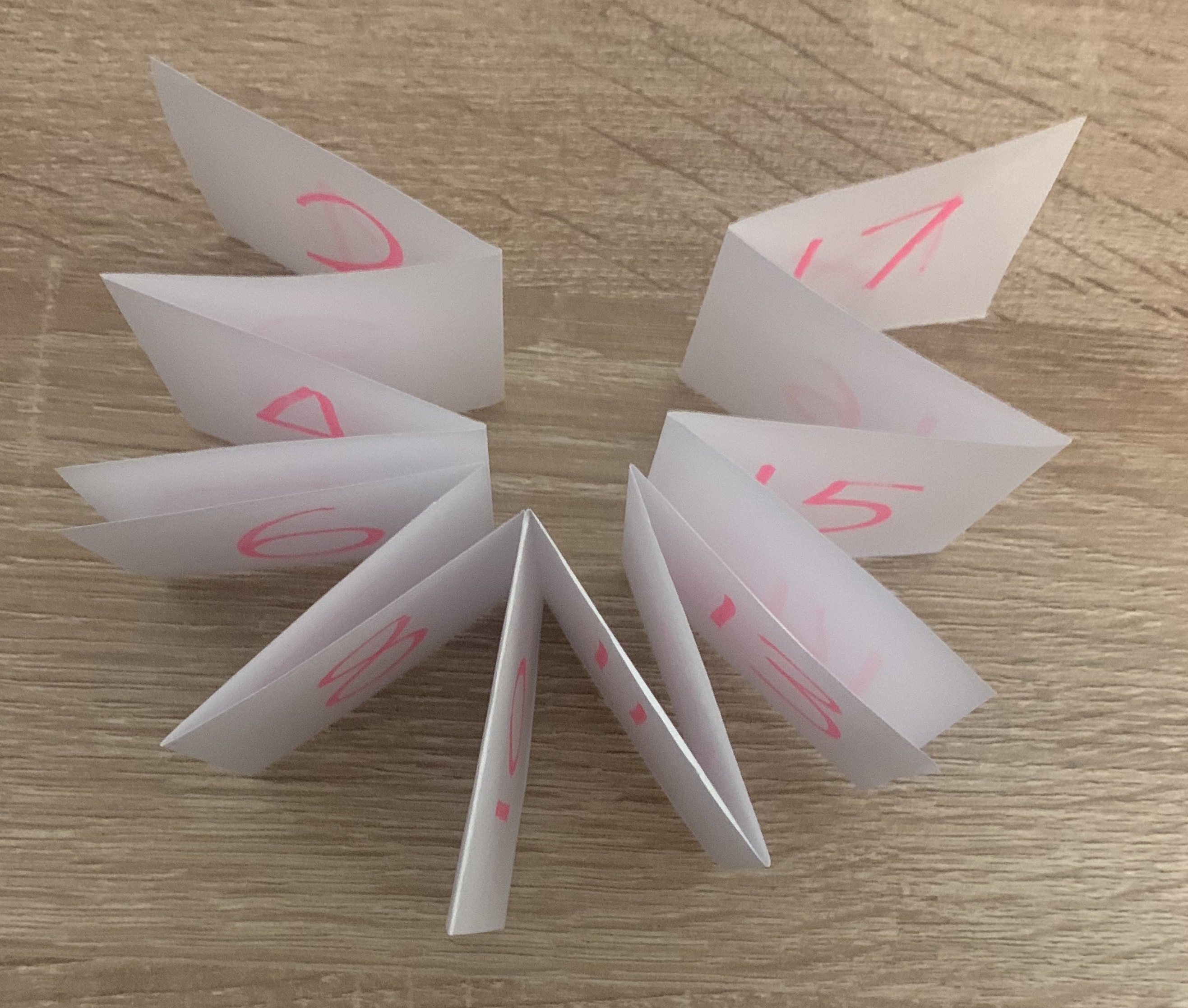
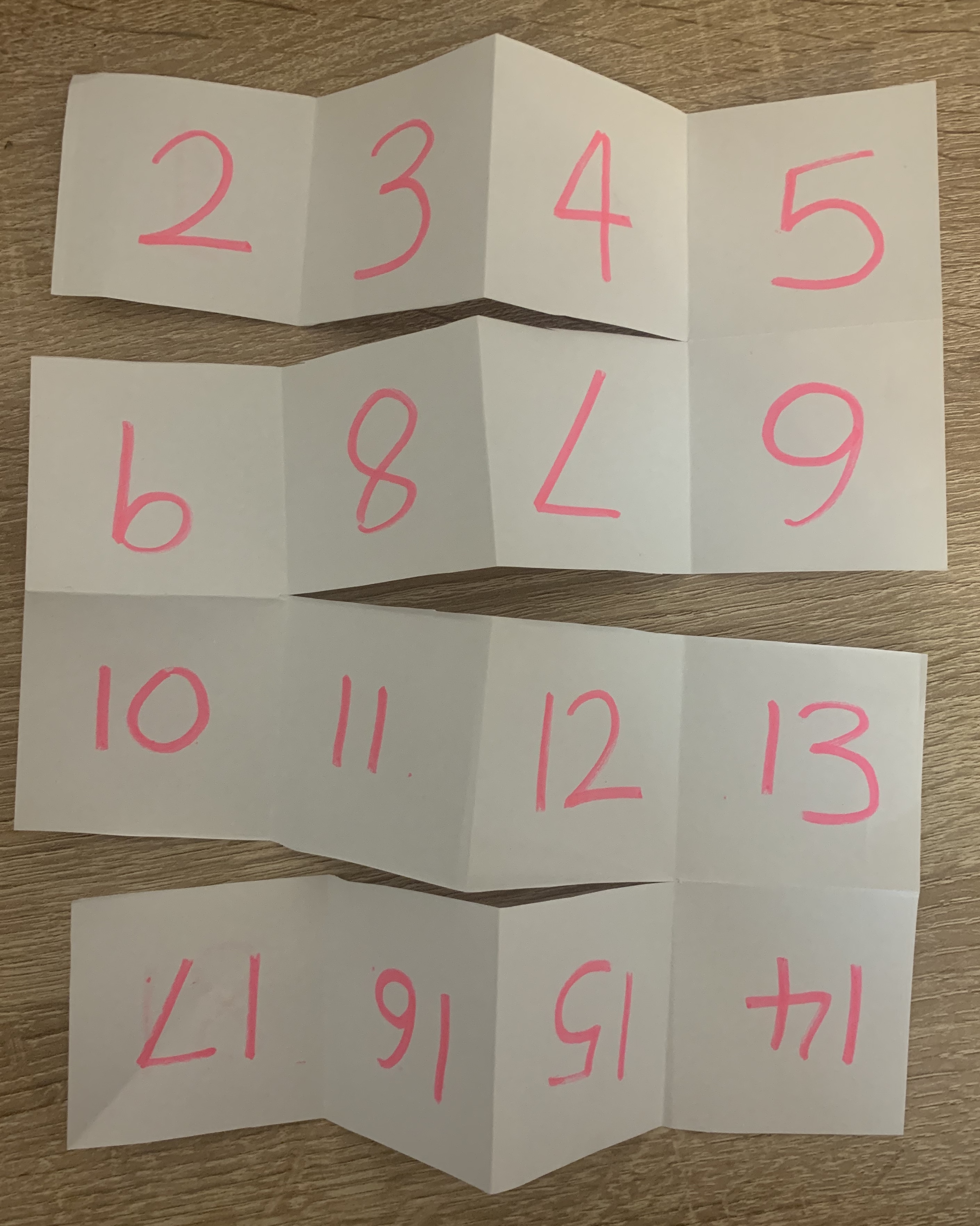
Meander Accordion Fold (18 pages)
Although this is done on a smaller scale (A3 would of worked better than A4) it is still a successful fold due to the amount of pages, and if scored deep enough it springs back into its original state, which is important when creating a folded document as you want it to return in the original state.
Reflection
I found this exercise interesting and helpful when numbering the pages and unfolding it to see what the layout is on the page, rather than assuming the pages would flow in the order they are when in a book format.
 rachaelmayesbook.design.blog